Although gaming was historically an entertainment-driven pursuit, games are now widely accepted as an impactful educational tool that engages children while teaching them an array of skills. Current research on the benefits of game-based learning (GBL) shows that students are learning more effectively and productively with this exciting medium. Using content with which students are already familiar, students quickly connect to the characters, stories, and goals within these games, and they remain motivated and engaged thanks to the inherent reward system that gaming provides. Think of the proverbial Pavlov’s dog salivating at the sound of a ringing bell. We are pretty motivated by that treat.
So what specifically are the benefits of educational games for children? And how do we as parents, caregivers, and teachers retrain our brains, not to knee-jerk recoil at the notion of more screen time when the game is played online? The first step is to gain some information about the many benefits for kids of playing educational games.
Benefits of Educational Games
According to Wikipedia, Friedlich Schiller, in his essay “Upon the Aesthetic Education of Man,” describes the play as a force of civilization, asserting that “humans are only fully human when they play.”
The ways in which fun and educational games can be maximized to create an ideal learning environment for children is the topic of ongoing research. The findings of this research show several reasons why children benefit from learning through this engaging mode of education.
#1. Builds motivation
In 2011 a group of US researchers showed evidence that playing games increase motivation to learn among students. Playing a game and learning the specific skills to compete, move up a level, or (better yet) win can get children hooked on continuing to play and returning the next day to implement their newly acquired knowledge. Simply put, beating a game is a lot of fun at any age.
#2. Improves problem-solving skills
Students who become engaged in designing games and apps increase problem-solving and strategic skills; it’s this out-of-the-box thinking that leads to the sometimes elusive and coveted critical thinking skills. These problem-solving skills benefit kids not only academically but throughout all areas of life success.
#3. Aids in language development
Do you know that feeling that children speak their own language when they are sharing their personal interests? Online games also each have their own language and terminology and the potential to inspire curious minds to get out that dictionary (or more likely, google it). Recent studies have shown evidence that children engaging with non-language-based games still gain progress in language development through playing games. In other words, the language of gaming is good for language learning more broadly.
#4. Boosts self-esteem
One advantage of integrating games with classroom learning is that it has significant results in building students’ self-esteem. Mastering a particular skill or game and the effort needed to do so is self-affirming and confidence-boosting. It feels good. Games require making choices, which also increase feelings of competency and personal value.
#5. Fosters teamwork
As play is the natural language of childhood; it makes sense that kids work best together (in and out of the classroom) when joining together in a game. Involving games in the educational sector teaches students about cooperation, good listening skills, sportsmanship, fairness, and respecting others. Working toward a common goal and earning the victory and the spoils (that treasure box at the end of the rainbow/sticker chart) can’t help but provide an incentive to get well as a team.
#6. Prepares for real-life events
Not only are educational games fun and engaging, but they also have the added benefit of stimulating children’s imaginative potential. By practicing life skills and problem-solving through a game, children gain a better understanding of the real world and can then apply skills from imagined scenarios to real-life events. By the age of three, children begin to pretend play. Engaging in game-playing has the same benefits that young children have intuited organically when they cook something up in a play kitchen, play school or dress up as their favorite superhero. Playing a game that requires focus and increased attention can also help children regulate their emotions. In this way, games can be an early introduction to both professional and emotional skills that will serve children well as they grow into adults.
#7. Encourages creativity
Plato is often famously quoted: “Every child is an artist. The problem is how to remain an artist once he grows up.” The wisdom in this quote is obvious: Children are creative by nature. Educational games play into children’s naturally creative modes of thinking and behaving. Games teach children that there are competing avenues to solving a problem, each with its own risks and rewards.
#8. Hones hand-eye coordination
The cognitive skill of hand-eye coordination is also stimulated through fun, educational games. Research supports that students who are active in game-playing have increased job performance. Games that promote the efficiency of time are particularly advantageous in terms of future work success. With the pressure and thrill of time running out on the clock, kids can learn to make split-second decisions that are still sound. Skills learned early are deeply ingrained and have the major benefit of improving decision-making when the brain and mind are at their most malleable.
Types of Educational Games
Now that we have looked at the benefits of integrating games with educational activities, we will be exploring different categories of game-based learning designed for kids. They include the following:
#1. Math
One advantage of educational games that focus on math and strategy is that they help students to use reasoning skills and work with underlying theories to find creative mathematical solutions. The goal of these games is for children to develop a conceptual rather than rote understanding of math concepts, which will be critical as they advance to higher levels of math. Some examples include:
Prodigy Math Game. This engaging, global platform has over 100 million student and teacher users. It is geared toward children between the ages of 6 and 14. This game covers topics from 1st to 8th grade as it aims to help students develop an interest in learning.
Buzzmath. This math game is suitable for middle school children between the ages of 8 and 14. Aligned with the TEKS curriculum, this game takes users on an adventure to help regain lost knowledge and transform a digital world into its original form.
Twelve a Dozen. This is another math game that helps children understand the thought process necessitated by solving complex algebraic equations. This game helps develop skills that help solve puzzles.
#2. Reading
Reading is a very important skill and milestone that children seek to master. Reading helps children pick up on spelling, grammar, and sentence construction while making a significant impact on expanding a child’s vocabulary. Reading also activates the imagination, transporting the reader to imagined characters and worlds. Some reading games include:
Treasure Hunt. This game uses riddle-solving to work toward a prize. Parents and caregivers can assist by hiding a child’s favorite things around the house and creating a scavenger hunt with written clues along the way. The child will then read the clues or directions aloud and answer before proceeding to find the hidden object.
Word-Based Snakes and Ladders. This game includes a game board with 100 squares in which to write simple words. This improves children’s ability to recognize sight words, an important skill in reading that goes beyond “sounding it out.”
Guess the Word. This is another reading game that involves a parent or caregiver. This game helps children to understand complex questions with the use of word association.
#3. Writing
Children first exposed to writing can feel overwhelmed by the simultaneous and complex tasks at play, such as spelling, grammar, diction, and vocabulary. Once children begin to write with more ease, writing evolves from a useful skill to master to a creative form of self-expression that involved infinite decisions. A blank page has endless possibilities. The following games can make a child into a budding writer with some practice:
Roll the Dice. Using dice to determine the number of words for each round, parents or teachers and kids can work together to create a fun story. The child will choose a character and setting and complete a sentence about each. Continuing to roll the dice will help determine the story. There is an opportunity to learn new tricky words.
Grocery List Writing. Using pretend play or an actual grocery list, this game includes writing down the ingredients needed and meal planning. This game teaches life skills such as creating a list and considering plans and budgets. Try for a simple list so the child can assist in writing the words.
#4. Health and fitness
Health and fitness games are a great way to get kids moving and begin exploring body awareness at an early age. These games not only improve health-related knowledge but may also improve a child’s coordination and agility. Engaging children with an athletic goal keeps kids active without focusing on the exertion itself. Games in this category use physical tasks as the means to score points and move from level to level. They include the following:
GoNoodle. This game, designed for kids ages 5 – 12, uses an avatar of a runner and engaging video content to motivate players to keep moving forward. GoNoodle is the ideal game for dance parties and can liven up even tedious tasks like household cleaning.
Eat and Move-O-Matic. This game involves teaching children about healthy lifestyle skills. Children can scroll through food lists and match them with an activity or particular exercise. Children learn about burning calories based on their food and activity choices.
Follow the Leader. This is a classic game that can be played indoors or outdoors. This game uses mirroring, a process of one person copying another, which is always comforting and validating to children. The leader can incorporate exercises such as push-ups, squats, lunges, sit-ups, or for the younger folks, frog jumps, bear crawls, and crab walks.
#5. Coding
As technological advances continue to evolve, there is no doubt that coding is the future of the tech industry. Coding games teach children to go beyond structured learning and create their own structures and processes while adopting new skills in communication, flexibility, and technology. And of course, it’s fun! Coding games include:
Roblox. This is a popular online gaming platform that is made up of over 47 million daily users. This game is appealing to a wide audience of children and young adults. And let’s face it, if you’ve been around a child in the last decade, you’ve probably already heard quite a bit about Roblox.
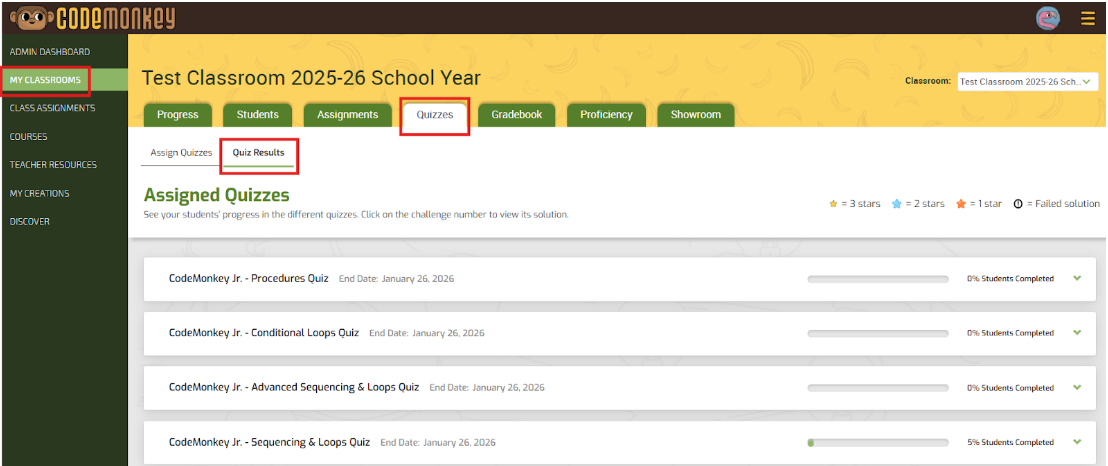
CodeMonkey. CodeMonkey is an educational computer coding game that teaches computer programming concepts and languages to kids. CodeMonkey is intended for students ages 6-14. Children will be able to navigate through the programming world with confidence after completing CodeMonkeys award-winning coding courses.
Conclusion
Educational games can benefit any child but has special benefits for children that thrive with non-traditional modes of learning. Introducing games in to educational programs creates an engaging dynamic that motivates students to develop skills and meet challenges. As we have explored, educational games can build motivation, improve problem-solving skills, aid language development, boost self-esteem, foster teamwork, prepare for real-life events, encourage creativity and hone hand-eye coordination for children and students who participate. And at the end of the day, doesn’t Mom deserve to have a little fun too?
Our world today is undergoing a rapid technological change. Which raises a very important question for educators and school leaders – how can we prepare our next generation for all the technological surprises the future holds?
Our world today is undergoing a rapid technological change. Which raises a very important question for educators and school leaders – how can we prepare our next generation for all the technological surprises the future holds?
Stay Up To Date on The Latest NEWS AND LEARN MORE ABOUT CODING FOR KIDS.
We use cookies on our website to give you the most relevant experience by remembering your preferences and repeat visits. By clicking “Accept”, you consent to the use of ALL the cookies. However you may visit Cookie Settings to provide a controlled consent.
This website uses cookies to improve your experience while you navigate through the website. Out of these cookies, the cookies that are categorized as necessary are stored on your browser as they are essential for the working of basic functionalities of the website. We also use third-party cookies that help us analyze and understand how you use this website. These cookies will be stored in your browser only with your consent. You also have the option to opt-out of these cookies. But opting out of some of these cookies may have an effect on your browsing experience.
Necessary cookies are absolutely essential for the website to function properly. This category only includes cookies that ensures basic functionalities and security features of the website. These cookies do not store any personal information.
Cookie
Type
Duration
Description
_codemonkey_session_rails_4
1
1 year
_ga
persistent
2 years
This cookie is installed by Google Analytics. The cookie is used to calculate visitor, session, campaign data and keep track of site usage for the site's analytics report. The cookies store information anonymously and assign a randomly generated number to identify unique visitors.
cookielawinfo-checkbox-advertisement
persistent
11 months
The cookie is set by GDPR cookie consent to record the user consent for the cookies in the category "Advertisement".
cookielawinfo-checkbox-analytics
persistent
11 months
This cookies is set by GDPR Cookie Consent WordPress Plugin. The cookie is used to remember the user consent for the cookies under the category "Analytics".
cookielawinfo-checkbox-functional
persistent
11 months
cookielawinfo-checkbox-necessary
persistent
11 months
This cookie is set by GDPR Cookie Consent plugin. The cookies is used to store the user consent for the cookies in the category "Necessary".
cookielawinfo-checkbox-non-necessary
0
11 months
This cookie is set by GDPR Cookie Consent plugin. The cookies is used to store the user consent for the cookies in the category "Non Necessary".
cookielawinfo-checkbox-other
persistent
11 months
cookielawinfo-checkbox-performance
persistent
11 months
This cookie is used to keep track of which cookies the user have approved for this site.
JSESSIONID
1
1 year
Used by sites written in JSP. General purpose platform session cookies that are used to maintain users' state across page requests.
viewed_cookie_policy
persistent
1 hour
The cookie is set by the GDPR Cookie Consent plugin and is used to store whether or not user has consented to the use of cookies. It does not store any personal data.
XSRF-TOKEN
persistent
1 year
The cookie is set by Wix website building platform on Wix website. The cookie is used for security purposes.
Any cookies that may not be particularly necessary for the website to function and is used specifically to collect user personal data via analytics, ads, other embedded contents are termed as non-necessary cookies. It is mandatory to procure user consent prior to running these cookies on your website.
Cookie
Type
Duration
Description
rlas3
persistent
11 months
The cookie is set by rlcdn.com. The cookie is used to serve relevant ads to the visitor as well as limit the time the visitor sees an and also measure the effectiveness of the campaign.
UserMatchHistory
persistent
1 month
Linkedin - Used to track visitors on multiple websites, in order to present relevant advertisement based on the visitor's preferences.
This cookie is set by Google Analytics and is used to distinguish users and sessions. The cookie is created when the JavaScript library executes and there are no existing __utma cookies. The cookie is updated every time data is sent to Google Analytics.
__utmb
persistent
30 minutes
The cookie is set by Google Analytics. The cookie is used to determine new sessions/visits. The cookie is created when the JavaScript library executes and there are no existing __utma cookies. The cookie is updated every time data is sent to Google Analytics.
__utmc
persistent
1 year
The cookie is set by Google Analytics and is deleted when the user closes the browser. The cookie is not used by ga.js. The cookie is used to enable interoperability with urchin.js which is an older version of Google analytics and used in conjunction with the __utmb cookie to determine new sessions/visits.
__utmt
persistent
10 minutes
The cookie is set by Google Analytics and is used to throttle request rate.
__utmz
persistent
6 months
This cookie is set by Google analytics and is used to store the traffic source or campaign through which the visitor reached your site.
_gat
persistent
1 minute
This cookies is installed by Google Universal Analytics to throttle the request rate to limit the colllection of data on high traffic sites.
YSC
1
1 year
This cookies is set by Youtube and is used to track the views of embedded videos.
This cookie is used by Google Analytics to understand user interaction with the website.
_gid
persistent
1 day
This cookie is installed by Google Analytics. The cookie is used to store information of how visitors use a website and helps in creating an analytics report of how the wbsite is doing. The data collected including the number visitors, the source where they have come from, and the pages viisted in an anonymous form.
GPS
persistent
30 minutes
This cookie is set by Youtube and registers a unique ID for tracking users based on their geographical location
MR
persistent
5 months
This cookie is used to measure the use of the website for analytics purposes.
MUIDB
1
1 year
This cookie is used by MicroSoft and collects data about users of visits on multiple website. This data is used to analyze the efficiency of advertisements on websites.
This cookie is set by Facebook to deliver advertisement when they are on Facebook or a digital platform powered by Facebook advertising after visiting this website.
bscookie
1
2 years
This cookie is a browser ID cookie set by Linked share Buttons and ad tags.
fr
1
3 months
The cookie is set by Facebook to show relevant advertisments to the users and measure and improve the advertisements. The cookie also tracks the behavior of the user across the web on sites that have Facebook pixel or Facebook social plugin.
IDE
1
2 years
Used by Google DoubleClick and stores information about how the user uses the website and any other advertisement before visiting the website. This is used to present users with ads that are relevant to them according to the user profile.
MUID
persistent
1 year
Used by Microsoft as a unique identifier. The cookie is set by embedded Microsoft scripts. The purpose of this cookie is to synchronize the ID across many different Microsoft domains to enable user tracking.
pxrc
persistent
2 months
The purpose of the cookie is to identify a visitor to serve relevant advertisement.
rlas3
persistent
11 months
The cookie is set by rlcdn.com. The cookie is used to serve relevant ads to the visitor as well as limit the time the visitor sees an and also measure the effectiveness of the campaign.
skimCSP
persistent
11 months
This cookie is set by SkimResources. The cookie is used to record data on the visitor to optimize the relevance of the advretisements served to the users.
TapAd_DID
persistent
2 months
The cookie is set by tapad.com. The purpose of the cookie is to track users across devices to enable targeted advertising
TapAd_TS
persistent
2 months
The cookie is set by Tapad.com. The purpose of the cookie is to track users across devices to enable targeted advertising.
TDCPM
persistent
1 year
The cookie is set by CloudFare service to store a unique ID to identify a returning users device which then is used for targeted advertising.
TDID
persistent
1 year
The cookie is set by CloudFare service to store a unique ID to identify a returning users device which then is used for targeted advertising.
test_cookie
persistent
15 minutes
This cookie is set by doubleclick.net. The purpose of the cookie is to determine if the users' browser supports cookies.
VISITOR_INFO1_LIVE
1
5 months
This cookie is set by Youtube. Used to track the information of the embedded YouTube videos on a website.