Keren, madre de tres niños en la escuela primaria, comprende la importancia de una educación en informática desde una edad temprana. Ha visto de primera mano que la mejor manera de que los niños retengan conocimientos es divertirse mientras aprenden. Keren trabaja como directora de marketing creativo en CodeMonkey.
Undoubtedly, most parents and teachers will have heard of Minecraft. It is one of the most popular video games of all time. Even after 15 years on the market, Minecraft still continues to dominate; it is the second-highest-grossing video game of all time. Minecraft has diversified and now includes Minecraft Education, with use in 140 countries and over 40,000 schools!
In this article we will:
Discover what Minecraft Education is;
Show examples of lessons;
See the benefits and drawbacks of the platform;
Explore how teachers and parents can get started with Minecraft Education;
Tell tips and tricks for using Minecraft Education;
Understand what the future holds for this educational software service and much more.
What is Minecraft Education and how is it different from regular Minecraft?
Released in 2016, Minecraft Education is purposefully designed for classroom use (though anyone can sign up), merging elements of the highly popular Minecraft game, with features built specifically to nurture collaboration, assessment, programming, and much more.
With teachers’ heavy workloads and well-being in mind, Minecraft Education includes over 600 pre-planned lessons, featuring cross-curricular links with PROVENIR (Science, Technology, Engineering, and Mathematics); Coding; SEL (Social and Emotional Learning); History; English (Language Arts); and much more. Teachers are even encouraged to share good practices by submitting lessons they have created, continually adding to the bank of Minecraft Education’s available lessons.
Minecraft Education boasts that its game-based platform is a great tool for learning. For teachers, there is teaching support that offers tutorials to assist educators (particularly those who are not familiar with Minecraft or Minecraft Education) and guides for cross-curricular learning. There are also numerous safety features, ensuring children learn in a safe and secure environment. Children can work together with other classmates (up to 30 at a time) on projects and learning can be tailored so all children can access the Minecraft Education content. Minecraft Education can also be played on a range of technology (e.g. Windows, Mac, Chromebook/Android, and iPads/iPhones) ensuring most schools (and individual users) will not have to invest in further hardware or software to make use of the content.
What are some examples of pre-planned lessons from Minecraft Education that can be used?
A quick visit to Minecraft Education’s Resources page produces a bank of over 600 cross-curricular lessons that are included, with most featuring tutorials. While there is a wealth of resources available to use, both teachers and parents must scrutinize the lessons to ensure that they are meeting the required learning objectives; many of the lessons are submitted by users from around the world and there is seemingly no quality assurance oversight.
Like the game, Minecraft Education is made up of a range of different ‘worlds’ that allow students to explore and make contributions to. Each lesson is based around a particular world. Most lessons include: learning objectives and curriculum links; skills that will be developed; required supporting files/documents; suggested age group the lesson is suitable for; structure of the lesson (with varying degrees of detail); and estimated time needed for the lesson or project.
Examples of lessons available:
Science: “Build with Bees: Habitat”, suggested for children aged 8-10 and with multiple curriculum links, allows pupils to apply their knowledge of bees to create and support their own bee colonies.
Mathematics: “Decimal/Fraction Garden”, suggested for children aged 8-10 and 11-13, allows pupils to demonstrate their understanding of the relationship between decimals and fractions using a 10×10 grid.
Computer Science: “Hour of Code: Escape Estate”, suggested for children aged 6 and up, introduces pupils to the use of computational thinking through the basics of Block-based or Python coding.
English (Language Arts): “Shipwreck Narrative”, suggested for children aged 8-10 with multiple learning objectives and curriculum links, allows children to explore a sunken ship to develop their observational skills. The pupils then take notes of what they have explored/seen and write a narrative of their adventure.
History & Culture: “World War 1”, suggested for pupils aged 11-14 and part of a sequence of five lessons, involves children exploring a ‘World War One world’ and learning about the causes of WW1, as well as the nations involved.
Art & Design: “Building Architecture”, suggested for children aged 6-14, allows children to emulate and ‘build’ buildings in different architectural styles.
Digital Citizenship: “Privacy Prodigy”, suggested for children aged 6-18, involves children learning about digital safety and how best to navigate issues if personal information is compromised.
Equity & Inclusion: “Malala: One Girl Among Many”, suggested for children aged 8-18, invites children to learn about Malala Yousafzai and her mission to change the access to education for girls and women around the world. Pupils will even engage with the United Nations in a Minecraft Education World to rebuild a school in Pakistan.
Climate & Sustainability: “Zero Waste” encourages children to research and record ways to reduce food waste in their own communities (home and school).
What are some of the benefits and drawbacks of using Minecraft Education?
Based on over 119000 reviews on Google and with a rating of 4.1 out of 5, Minecraft Education is certainly a popular educational software service. However, as with anything, there are both benefits and drawbacks.
Benefits: Because Minecraft (the game) is already so popular around the globe, most children will have enthusiasm and will be eager to embrace Minecraft Education in the classroom. Teachers appreciate the ability to use ‘controls’ with the traditional open-world feature of Minecraft, allowing for greater levels of engagement from children, as well as the opportunity for pupils to demonstrate their learning on a familiar platform. Teachers will also welcome: the abundance of lessons available with cross-curricular links; the ability to use Minecraft Education for both short and long-term projects; the development of children’s critical and creative thinking skills; and the range of languages that Minecraft Education available.
Drawbacks: Some children will find that because there is so much control by the teacher in Minecraft Education, that some of the awe and wonder they feel in the Minecraft game is lost. Furthermore, children who are familiar with using Minecraft (the game) will find Minecraft Education restrictive compared to regular gameplay. Another drawback to using Minecraft Education is that some children will become distracted by playing the game and disregard their learning objectives. Technological hitches, such as incompatible devices, software updates and inconsistent internet connections will also cause frustrations to both students and teachers.
How can teachers get started with using Minecraft Education in the classroom?
As with most educational software services, Minecraft Education does have fees associated with its use. The fees cover the cost of the license to use Minecraft Education in the classroom and at home, allowing teachers to assign homework or activities for children who are not in school due to illness/holiday. However, if a school, teacher or parent is uncertain about purchasing the license to use Minecraft Education, the company offers a free demo.
Despite being expressly designed for the classroom, parents can purchase a license to use Minecraft Education at home. This can be used to support children who are home-schooled or for parents who want additional aprendizaje mediante juegos, rather than just traditional video games.
What are some tips for using Minecraft Education in the classroom?
Introducing Minecraft Education into the classroom, or at home, will likely prompt squeals of delight from children. However, there are several tips for implementing Minecraft Education to ensure children and educators can make the most of this educational tool.
1. For the first few times that Minecraft Education is used in class, teachers should allow the children plenty of time to just play and explore. Failure to allow play when first introduced will lead to pupils who are distracted by gameplay when they begin using Minecraft Education in a more formal, structured way.
2. Once children have had a chance to explore and play on Minecraft Education, ensure that each subsequent lesson features clear goals and learning objectives. Just like any other lesson, children need to be aware of the teacher’s expectations and what they will be required to complete during the time they are given.
3. Teachers should make use of the in-game tutorials to demonstrate to children how to interact and use the world. This will also ensure that both teachers and pupils are on the same page about the learning and expectations of the lesson.
4. Be prepared for hiccups along the way. Not only will Minecraft Education be a new platform for most teachers, but children will find it slightly different to the original Minecraft game. You will also have many children who have never played the Minecraft game. Most projects will also take longer on Minecraft Education, so ensure there is plenty of support for children to plan their work.
5. Don’t overuse Minecraft Education. While this exciting new platform might be readily embraced by teachers and children, there is a danger that it can be “too much of a good thing” which could lead to feelings of disinterest and boredom from children.
6. Teachers should ensure they are familiar with simple gameplay and commands – though they certainly don’t have to be experts! The best way to do this? Playing the game itself! Teachers can also make good use of YouTube video tutorials created by other educators.
7. Take advantage of the pre-made lessons so teachers (and students) become familiar with using Minecraft Education in the classroom. Of course, there may be lessons that aren’t exactly suited to what a teacher may be looking for, however, they can use what is available to become comfortable with the platform and then experiment with the creation of their own bespoke lessons at a later date.
What does the future hold for Minecraft Education?
Interestingly, while there are plenty of lessons (over 600) already – and many more being added each day – available for teachers and parents to use with Minecraft Education, there are also many partnerships forming with Minecraft Education to help inspire positive changes in the world. Continued partnerships, as well as teachers sharing best practice, will allow for new content to be regularly added to Minecraft Education.
BBC’s Frozen Planet II
With a desire to inspire younger audiences from around the globe, BBC Earth partnered with Minecraft Education to create five free worlds for (licensed) users. These worlds are available in over 25 different languages, making it accessible to a vast number of children, and are accompanied by lesson plans for teachers to help educate and engage students to explore the effects of climate change on the vital frozen climates in our world. Children can even play from the perspective of an animal, a feature never before available.
Minecraft Croydon
In February 2023, Minecraft Education, in partnership with Croydon Council, among others, and the Mayor of Croydon, challenged students to help design a future town centre that is a “healthier, greener and safer” version of the existing one.
Offshore Wind Power Challenge
In a partnership with the Crown Estate, Minecraft Education has introduced worlds that provide the opportunity for pupils to apply their environmentally-conscious knowledge and to learn more about the challenges faced when planning offshore wind farms, while still protecting the surrounding marine environment. Children also have the chance to learn more about conservation and ecology.
Artemis
NASA has also partnered with Minecraft Education to create three new exciting worlds – Rocket Build, Return to the Moon and Moon Base. The latter two worlds are exclusively available from Minecraft Education. These new worlds have been created to inspire the next generation of astronauts and scientists. Through these worlds, children can learn basic rocket engineering and mechanics, as well as have the opportunity to test their coding skills.
Given that the game of Minecraft is so successful with children aged 6 years and up (despite being an age rating of 10 years and up), it’s no surprise that Minecraft Education has garnered a dedicated following in classrooms around the world. Whether it is being used for a more traditional computer science lesson, or for a history lesson about World War One, one conclusion is evident: Minecraft Education is an interesting way to engage children in their learning.
Nuestro mundo actual está experimentando un rápido cambio tecnológico. Esto plantea una pregunta crucial para educadores y directores escolares: ¿cómo podemos preparar a nuestra próxima generación para todas las sorpresas tecnológicas que nos depara el futuro?
Nuestro mundo actual está experimentando un rápido cambio tecnológico. Esto plantea una pregunta crucial para educadores y directores escolares: ¿cómo podemos preparar a nuestra próxima generación para todas las sorpresas tecnológicas que nos depara el futuro?
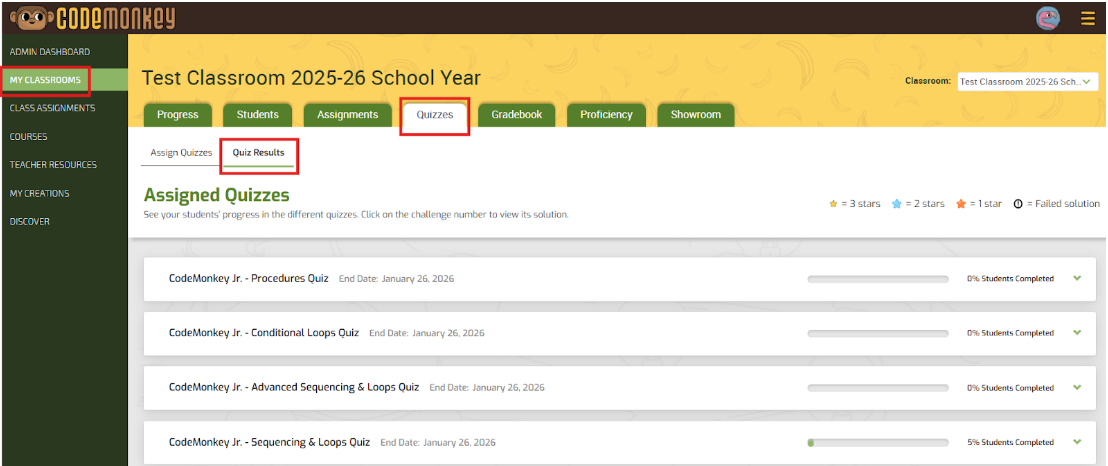
¡Hemos añadido cuestionarios a nuestra biblioteca dirigidos a nuestros prelectores con CodeMonkey Jr.! Hay un cuestionario para cada concepto de programación.
Manténgase al día sobre las últimas noticias Y MÁS INFORMACIÓN SOBRE CODIFICACIÓN PARA NIÑOS.
Usamos cookies en nuestro sitio web para brindarle la experiencia más relevante recordando sus preferencias y visitas. Al hacer clic en "Aceptar", acepta el uso de TODAS las cookies. Sin embargo, puede visitar la Configuración de cookies para proporcionar un consentimiento controlado.
Política de privacidad y cookies
Resumen de privacidad
Este sitio web utiliza cookies para mejorar su experiencia mientras navega por el sitio web. Fuera de estas cookies, las cookies que se clasifican como necesarias se almacenan en su navegador, ya que son esenciales para el funcionamiento de las funcionalidades básicas del sitio web. También utilizamos cookies de terceros que nos ayudan a analizar y comprender cómo utiliza este sitio web. Estas cookies se almacenarán en su navegador solo con su consentimiento. También tiene la opción de optar por no recibir estas cookies. Pero la exclusión voluntaria de algunas de estas cookies puede afectar su experiencia de navegación.
Las cookies necesarias son absolutamente esenciales para que el sitio web funcione correctamente. Esta categoría solo incluye cookies que garantizan funcionalidades básicas y características de seguridad del sitio web. Estas cookies no almacenan ninguna información personal.
Galleta
Tipo
Duración
Descripción
_codemonkey_session_rails_4
1
1 año
_Georgia
persistente
2 años
Esta cookie es instalada por Google Analytics. La cookie se utiliza para calcular los datos de visitantes, sesiones y campañas y realizar un seguimiento del uso del sitio para el informe de análisis del sitio. Las cookies almacenan información de forma anónima y asignan un número generado aleatoriamente para identificar visitantes únicos.
cookielawinfo-checkbox-publicidad
persistente
11 meses
La cookie se establece mediante el consentimiento de cookies del RGPD para registrar el consentimiento del usuario para las cookies en la categoría "Publicidad".
cookielawinfo-checkbox-analytics
persistente
11 meses
Estas cookies están establecidas por el complemento de WordPress de consentimiento de cookies de GDPR. La cookie se utiliza para recordar el consentimiento del usuario para las cookies en la categoría "Análisis".
cookielawinfo-checkbox-funcional
persistente
11 meses
cookielawinfo-checkbox-required
persistente
11 meses
Esta cookie está configurada por el complemento de consentimiento de cookies de GDPR. Las cookies se utilizan para almacenar el consentimiento del usuario para las cookies en la categoría "Necesarias".
cookielawinfo-checkbox-no necesario
0
11 meses
Esta cookie está configurada por el complemento de consentimiento de cookies de GDPR. Las cookies se utilizan para almacenar el consentimiento del usuario para las cookies en la categoría "No necesarias".
cookielawinfo-checkbox-otro
persistente
11 meses
cookielawinfo-checkbox-performance
persistente
11 meses
Esta cookie se utiliza para realizar un seguimiento de las cookies que el usuario ha aprobado para este sitio.
JSESSIONID
1
1 año
Utilizado por sitios escritos en JSP. Cookies de sesión de plataforma de propósito general que se utilizan para mantener el estado de los usuarios en las solicitudes de página.
view_cookie_policy
persistente
1 hora
La cookie está configurada por el complemento de consentimiento de cookies de GDPR y se utiliza para almacenar si el usuario ha dado su consentimiento o no para el uso de cookies. No almacena ningún dato personal.
XSRF-TOKEN
persistente
1 año
La cookie la establece la plataforma de creación de sitios web de Wix en el sitio web de Wix. La cookie se utiliza con fines de seguridad.
Las cookies que pueden no ser particularmente necesarias para que el sitio web funcione y se utilizan específicamente para recopilar datos personales del usuario a través de análisis, anuncios y otros contenidos integrados se denominan cookies no necesarias. Es obligatorio obtener el consentimiento del usuario antes de ejecutar estas cookies en su sitio web.
Galleta
Tipo
Duración
Descripción
rlas3
persistente
11 meses
La cookie la establece rlcdn.com. La cookie se utiliza para mostrar anuncios relevantes al visitante, así como para limitar el tiempo que el visitante ve una y también para medir la efectividad de la campaña.
UserMatchHistory
persistente
1 mes
Linkedin: se utiliza para rastrear a los visitantes en múltiples sitios web, con el fin de presentar anuncios relevantes según las preferencias del visitante.
Google Analytics establece esta cookie y se utiliza para distinguir usuarios y sesiones. La cookie se crea cuando se ejecuta la biblioteca JavaScript y no existen cookies __utma. La cookie se actualiza cada vez que se envían datos a Google Analytics.
__utmb
persistente
30 minutos
Google Analytics establece la cookie. La cookie se utiliza para determinar nuevas sesiones / visitas. La cookie se crea cuando se ejecuta la biblioteca JavaScript y no existen cookies __utma. La cookie se actualiza cada vez que se envían datos a Google Analytics.
__utmc
persistente
1 año
Google Analytics establece la cookie y se elimina cuando el usuario cierra el navegador. La cookie no es utilizada por ga.js. La cookie se utiliza para permitir la interoperabilidad con urchin.js, que es una versión anterior de Google Analytics y se utiliza junto con la cookie __utmb para determinar nuevas sesiones / visitas.
__utmt
persistente
10 minutos
Google Analytics establece la cookie y se utiliza para acelerar la tasa de solicitud.
__utmz
persistente
6 meses
Google Analytics establece esta cookie y se utiliza para almacenar la fuente de tráfico o la campaña a través de la cual el visitante llegó a su sitio.
_revólver
persistente
1 minuto
Google Universal Analytics instala estas cookies para acelerar la tasa de solicitud y limitar la recopilación de datos en sitios de alto tráfico.
YSC
1
1 año
Estas cookies son establecidas por Youtube y se utilizan para rastrear las vistas de videos incrustados.
Google Analytics utiliza esta cookie para comprender la interacción del usuario con el sitio web.
_gid
persistente
1 día
Esta cookie es instalada por Google Analytics. La cookie se utiliza para almacenar información sobre cómo los visitantes usan un sitio web y ayuda a crear un informe analítico de cómo está funcionando el sitio web. Los datos recopilados, incluido el número de visitantes, la fuente de donde provienen y las páginas, se muestran de forma anónima.
GPS
persistente
30 minutos
Esta cookie la establece Youtube y registra una identificación única para rastrear a los usuarios según su ubicación geográfica.
SEÑOR
persistente
5 meses
Esta cookie se utiliza para medir el uso del sitio web con fines analíticos.
MUIDB
1
1 año
MicroSoft utiliza esta cookie y recopila datos sobre los usuarios que visitan varios sitios web. Estos datos se utilizan para analizar la eficacia de los anuncios en sitios web.
Facebook establece esta cookie para entregar publicidad cuando están en Facebook o en una plataforma digital impulsada por publicidad de Facebook después de visitar este sitio web.
bscookie
1
2 años
Esta cookie es una cookie de identificación del navegador establecida por los botones de compartir vinculados y las etiquetas publicitarias.
fr
1
3 meses
Facebook configura la cookie para mostrar anuncios relevantes a los usuarios y medir y mejorar los anuncios. La cookie también rastrea el comportamiento del usuario en la web en sitios que tienen píxeles de Facebook o complementos sociales de Facebook.
IDE
1
2 años
Utilizado por Google DoubleClick y almacena información sobre cómo el usuario utiliza el sitio web y cualquier otro anuncio antes de visitar el sitio web. Se utiliza para presentar a los usuarios anuncios que son relevantes para ellos de acuerdo con el perfil del usuario.
MUID
persistente
1 año
Usado por Microsoft como identificador único. La cookie se establece mediante scripts integrados de Microsoft. El propósito de esta cookie es sincronizar la identificación en muchos dominios de Microsoft diferentes para permitir el seguimiento de usuarios.
pxrc
persistente
2 meses
El propósito de la cookie es identificar a un visitante para ofrecer publicidad relevante.
rlas3
persistente
11 meses
La cookie la establece rlcdn.com. La cookie se utiliza para mostrar anuncios relevantes al visitante, así como para limitar el tiempo que el visitante ve una y también para medir la efectividad de la campaña.
skimCSP
persistente
11 meses
SkimResources establece esta cookie. La cookie se utiliza para registrar datos sobre el visitante con el fin de optimizar la relevancia de las ventajas que se ofrecen a los usuarios.
TapAd_DID
persistente
2 meses
La cookie la coloca tapad.com. El propósito de la cookie es rastrear a los usuarios en todos los dispositivos para permitir publicidad dirigida
TapAd_TS
persistente
2 meses
Tapad.com establece la cookie. El propósito de la cookie es rastrear a los usuarios en todos los dispositivos para permitir publicidad dirigida.
TDCPM
persistente
1 año
El servicio CloudFare configura la cookie para almacenar una identificación única para identificar un dispositivo de usuarios recurrentes que luego se utiliza para publicidad dirigida.
TDID
persistente
1 año
El servicio CloudFare configura la cookie para almacenar una identificación única para identificar un dispositivo de usuarios recurrentes que luego se utiliza para publicidad dirigida.
test_cookie
persistente
15 minutos
Esta cookie la establece doubleclick.net. El propósito de la cookie es determinar si el navegador de los usuarios admite cookies.
VISITOR_INFO1_LIVE
1
5 meses
Youtube establece esta cookie. Se utiliza para rastrear la información de los videos de YouTube incrustados en un sitio web.
Esta cookie está configurada por linkedIn. El propósito de la cookie es habilitar las funcionalidades de LinkedIn en la página.
lang
persistente
1 año
Esta cookie se utiliza para almacenar las preferencias de idioma de un usuario para ofrecer contenido en ese idioma almacenado la próxima vez que el usuario visite el sitio web.
lidc
persistente
1 día
LinkedIn establece esta cookie y la utiliza para el enrutamiento.