Keren, madre de tres niños en la escuela primaria, comprende la importancia de una educación en informática desde una edad temprana. Ha visto de primera mano que la mejor manera de que los niños retengan conocimientos es divertirse mientras aprenden. Keren trabaja como directora de marketing creativo en CodeMonkey.
Did you know there are nearly 9,000 different coding languages? Many of them are hardly used but have been created in the world of programming through the years. The question that is important to educators and parents alike is, what are the best coding languages for kids?
Children are like sponges! They absorb at a faster rate than adults. What an opportune time to introduce programming concepts into their young developing minds! In today’s world, we are fully aware of how important a computer science education is for their future careers.
los Oficina de Estadísticas Laborales de EE. UU. states, that the employment of computer and information research scientists is projected to grow 26% from 2023 to 2033. This far exceeds the speed of growth for all other occupations. They will be at the top of the food chain when it comes to financial comfort. The median annual wage for careers in the field of Computer Science was $145,080. The highest 10 percent earned more than $194,430!
PlayStations, Pokemon cards, or whatever you gifted your trendy Sneakerhead, nothing will solidify a child’s future like programming courses for children. “Kids will be kids”, as they say. They still like to have fun even while learning. That is what’s so great about the CodeMonkey coding curriculum. CodeMonkey is an educational game-based environment where kids learn to code with easy-to-learn coding languages! Children retain information much better when they are enjoying themselves. If you’ve ever built an exploding volcano in science class, you know what I’m talking about. Today children need to learn so much more in computer science than ever before. What makes learning a coding language enjoyable? Besides being gamified, it must gradually teach programming concepts that build skills with confidence.
Here are our top 10 picks for Best Kids Coding Languages:
1. CoffeeScript
CoffeeScript is the perfect language for children and beginners to learn, as it has many real-world applications while remaining intuitive. As a language that compiles into JavaScript, it enhances conciseness and readability. The clean and simple syntax of CoffeeScript removes unnecessary symbols, making code easier to read and write.
Since CoffeeScript runs in the browser (like JavaScript), kids can quickly see the results of their code in action, fix mistakes, and learn through experimentation. By starting with CoffeeScript, children can build a strong foundation in coding before moving to more complex languages.
2. Python
One of the most popular programming languages in the world, Python is easy to learn, even for kids, thanks to its user-friendly syntax and straightforward approach. Unlike other programming languages, Python’s code resembles plain English, making it easier to understand. It is widely used in various fields, such as web development, data science, and artificial intelligence.
Kids can use Python to create interactive games, animations, and websites, giving them a head start in their future careers. Learning Python is fun and helps develop problem-solving skills and a strong foundation in coding.
3. HTML
HTML (HyperText Markup Language) is the foundation of almost every website on the internet, making it an essential skill for future programmers. It’s also a great language for kids to learn because they can see the code they create and the results in real time in their browser.
By learning HTML, kids can understand how websites are designed and create simple web pages with links, images, videos, and other interactive elements. Along with CSS and JavaScript, HTML is a crucial part of web development.
4. JavaScript
JavaScript is one of the core languages of web development and is used to create web applications, interactive websites, and browser-based games. It’s a great language for kids to learn because of its clean syntax and ability to provide immediate visual feedback in the browser, making coding fun and engaging.
Together with HTML and CSS, JavaScript can be used to build interactive apps, full-scale games, and personal websites. While it may not be the easiest language to learn, its wide range of functions makes JavaScript a powerful and versatile tool for programming.
5. Ruby
Ruby is a popular programming language with an easily readable syntax that resembles everyday language, reducing the complexity of writing and understanding code. It is simple and intuitive, allowing beginner programmers to gradually develop more complex code.
Ruby is perfect for young kids and new coders because it was designed to turn coding into an effortless activity. This programming language effectively introduces complex concepts in a clear and straightforward manner.
6. C++
Although heavily math-based (which may be a deterrent to some), once learned, children will be following in the footsteps of many programmers who got their start in this coding language.
C++ provides a deep understanding of programming, and is widely used in game development, robotics and software engineering. For kids interested in games or hardware, it offers a strong foundation for future programming challenges.
7. Swift
Swift is a programming language primarily used for IOS Development. It was released in 2014 and is still considered one of the best coding tools and programming languages for kids. Apple’s Swift Playgrounds app offers various challenges, allowing kids to either build a project from scratch, or use a pre-build template.
8. Go
Go, or Golang is a programming language created by Google. It is a great choice for beginners, especially kids, because of its clean syntax and efficiency. Go’s design focuses on simplicity, making it easy to learn and understand.
It’s widely used in cloud computing and web development, which allows kids to develop strong coding skills and prepare them for the future, particularly in areas like software engineering..
9. Scratch
Created for children between the ages of 8 and 16, Scratch uses drag-and-drop blocks to create programs, animations, games, stories, and apps. Its intuitive and highly visual interface makes Scratch one of the top programming languages for kids.
Scratch is easy to master and can be one of the first choices when introducing your child to coding, as it teaches basic programming concepts such as loops, sequencing, and logic.
10. Lua
Lua is one of the best coding languages for kids who want to start with text-based programming. It’s easy to learn, beginner-friendly, and powerful, known for its simplicity, portability, and speed.
Because of its straightforward syntax, Lua is sometimes compared to Python, and like Python, it has a short learning curve. Once you get the hang of it, Lua is great for robotics, mobile apps, and video games. Did you know that Angry Birds and Roblox are based on Lua?
So, if you’re an aspiring game developer, give Lua a try—it’s one of the most powerful free programming languages in the industry.
When to start teaching kids to code?
Children can start learning to code as early as 5 or 6 years old! Preschool and Kindergarten students are not only energetic physically, but their minds are firing on all circuits, ready to learn new skills and concepts! CodeMonkey Jr. is our beginner game that teaches block-based coding. It’s a great introduction to text-based coding with the programming languages discussed. The visual rather than alphabetical programming allows these youngsters to grasp the fundamental concepts of coding, without the need to have mastered reading. Fun colors and activities make CodeMonkey jr. a great beginner’s course into the world of coding for kids.
Set up an environment conducive to learning!
Whether at home or school, kids need to learn in a positive space. Emotionally they need to feel supported and encouraged. We need to give them the right tools from technology to comfortable workspaces. Make it comfortable but not too comfortable! Sitting in cushy chairs or a bed can take a child’s focus away from the task at hand. Make sure they have up-to-date equipment and software that can handle the demands of an impatient child, as they sometimes tend to be. Eliminate distractions like loud music or the sounds of others talking. Headphones are great for kids. They feel cool wearing them and keep them focused on the computer. We use great music and sound effects on our CodeMonkey platform to keep children engaged while they code away!
Beyond this, parents and teachers should encourage kids to learn independently while still being there to support their questions and progression. There should not be high pressure demands at this stage of their learning journey. Learning should be fun yet encouraged. One of the best tools in a child’s education is a predictable learning schedule. Set a time a few times a week for your kids to play CodeMonkey. CodeMonkey has a progressive curriculum that fosters this important learning technique.
Let’s talk about children’s brain development and the importance of a computer science education early.
Children’s brains develop the most from birth to 5 years old. Their brains develop at an astounding 90% in that time! All the developmental skills learned are beneficial to the entire brain. Think of moving parts working together in a well-oiled machine. Their minds are developing stronger senses, balance, visual recognition, sensations, behavior, memory, planning, abstract thinking, etc. Learning to code specifically develops memory, problem-solving skills, creative thinking and cognitive skills.
Ages 5-7 is the ideal time to introduce coding for a great head start for their future. Children’s language skills are quickly developing at these ages. They start to really grasp the concepts of planning, building, the relation between space and time, etc. These are all the fundamentals of building great code! This is a critical time to introduce them to new skills to enhance their rapidly growing brains! Finger-painting and blowing bubbles were fabulous, but let’s turn it up a notch now shall we?
10 Cognitive thinking advances in a 5-6 year old’s development:
1. Their language improves and is more understandable to everyone around them.
You may hear your child or student using new words that surprise you. How many times have you heard someone say, “I can’t believe what my child said to me the other day?”.
2. Children at this age are starting to display a longer attention span.
We all know how impossible going to the movies with a toddler is. We can now enjoy sitting through the newest 3-D animation movie at the theatres with our growing kids. Who knows, you may have the next animator sitting next to you munching on popcorn. Coding is a great introduction to a future career in any computer science industry.
3. A significant leap in applying creative thinking to problem-solving is more defined.
Children at this stage have moved beyond basic play and are getting into more complex activities like puzzles. They love building make-believe worlds with their toys and computer games. They are using their creativity and problem-solving skills to play.
4. They start to speak in more detail.
Any parent or teacher will attest to the constant flow of questions and endless stories. Trying to be a patient and active listener is so important at this time. Hearing them excitedly speak about their achievements, when they complete a goal, is like music to our ears. Learning to code is a great method for trial and error and learning to overcome obstacles.
5. A sense of humor is starting to emerge. You may even have the privilege of hearing kindergarten jokes daily. Try to contain yourself.
There is actually quite a bit of genius in humor. People that make us laugh with their quick wit are highly intelligent. A child that has the foresight to comprise a joke, for the sheer purpose of making others happy, is a talent. If your child is starting to show these signs, then you should be proud.
6. Kids at this age start to elaborate in their story-telling abilities with a clearer beginning, middle, and end.
Children start explaining more descriptively. Their memory and imaginative skills are developing, which leads to some very colorful stories!
7. They start to develop a better understanding of the world around them, including heavier topics like life and death.
One may hear their child ask some really tough questions, like “mom will I ever see Fluffy again?”. These are all important clues that they are thinking not only in the present moment, but in past and future as well.
8. 5-6 year olds begin to distinguish fantasy from reality.
With advances in animation, sometimes it’s difficult for younger children to understand what is real and what is not. As we explain the differences between fact and fiction, they quickly grasp the concept. This is an important factor in their growing development. This is thanks to the rapid rate at which they absorb what they are taught.
9. 5-6 years olds start using sentence structure and correct grammar more often.
Children’s language development greatly improves at this stage. Coding languages are exactly that, languages! The more connections they make in their brain to different languages, the stronger their minds become.
10. The ability to describe similarities between two objects is more developed.
Spatial and visual recognition is a key factor in block-based coding, the first step to text-based coding languages. Kids can put this into practice with CodeMonkey Jr.
What programming languages does CodeMonkey teach kids who want to learn how to code?
Once young children have moved beyond CodeMonkey Jr. they graduate to our next-level courses. CodeMonkey uses CoffeeScript and Python as their coding languages. These are text-based languages that are easy for children to learn. We felt that these two languages are instrumental in building a solid foundation for children to learn to program, which is why we chose these particular ones on our platform.
Our course Coding Adventure uses the programming language CoffeeScript. Similar to JavaScript, it’s a coding language that many professionals use for developing web applications. One of the reasons we chose CoffeeScript is because of its friendly syntax. It’s the closest programming language to mimic the English language.
Coding Chatbots and Banana Tales use Python. This popular programming language is used frequently by developers throughout the industry. Children build the confidence and skills to one day develop websites, games, and apps.
Teaching children to code is important for many reasons. They are developing important computer skills, specifically important in today’s world, where digital literacy is so important. Nurturing their growth in communication, confidence, and future careers are all reasons children benefit from learning to code. Start with the right kids’ coding language on a fun & gamified educational platform like CodeMonkey!
Enjoy a fun-filled gaming experience that will teach your kids to code!
Nuestro mundo actual está experimentando un rápido cambio tecnológico. Esto plantea una pregunta crucial para educadores y directores escolares: ¿cómo podemos preparar a nuestra próxima generación para todas las sorpresas tecnológicas que nos depara el futuro?
Nuestro mundo actual está experimentando un rápido cambio tecnológico. Esto plantea una pregunta crucial para educadores y directores escolares: ¿cómo podemos preparar a nuestra próxima generación para todas las sorpresas tecnológicas que nos depara el futuro?
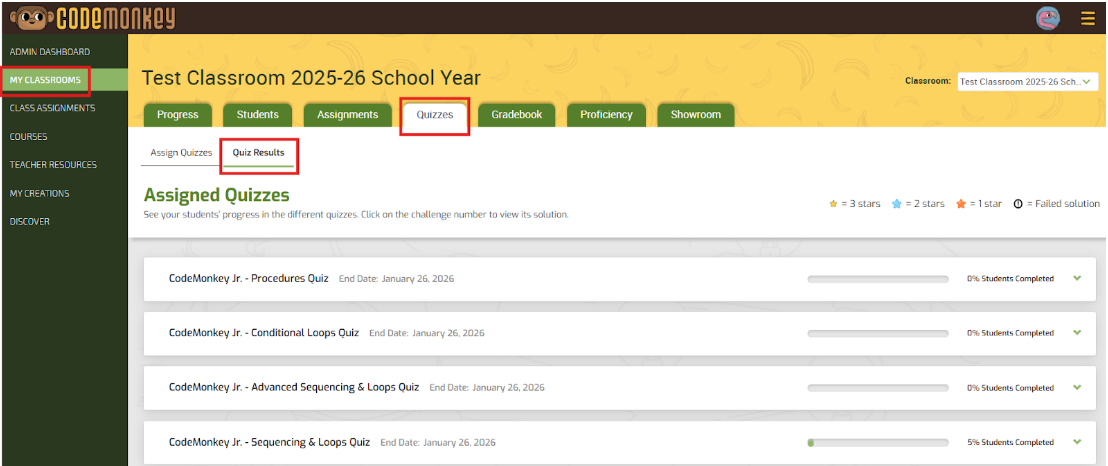
¡Hemos añadido cuestionarios a nuestra biblioteca dirigidos a nuestros prelectores con CodeMonkey Jr.! Hay un cuestionario para cada concepto de programación.
Manténgase al día sobre las últimas noticias Y MÁS INFORMACIÓN SOBRE CODIFICACIÓN PARA NIÑOS.
Usamos cookies en nuestro sitio web para brindarle la experiencia más relevante recordando sus preferencias y visitas. Al hacer clic en "Aceptar", acepta el uso de TODAS las cookies. Sin embargo, puede visitar la Configuración de cookies para proporcionar un consentimiento controlado.
Política de privacidad y cookies
Resumen de privacidad
Este sitio web utiliza cookies para mejorar su experiencia mientras navega por el sitio web. Fuera de estas cookies, las cookies que se clasifican como necesarias se almacenan en su navegador, ya que son esenciales para el funcionamiento de las funcionalidades básicas del sitio web. También utilizamos cookies de terceros que nos ayudan a analizar y comprender cómo utiliza este sitio web. Estas cookies se almacenarán en su navegador solo con su consentimiento. También tiene la opción de optar por no recibir estas cookies. Pero la exclusión voluntaria de algunas de estas cookies puede afectar su experiencia de navegación.
Las cookies necesarias son absolutamente esenciales para que el sitio web funcione correctamente. Esta categoría solo incluye cookies que garantizan funcionalidades básicas y características de seguridad del sitio web. Estas cookies no almacenan ninguna información personal.
Galleta
Tipo
Duración
Descripción
_codemonkey_session_rails_4
1
1 año
_Georgia
persistente
2 años
Esta cookie es instalada por Google Analytics. La cookie se utiliza para calcular los datos de visitantes, sesiones y campañas y realizar un seguimiento del uso del sitio para el informe de análisis del sitio. Las cookies almacenan información de forma anónima y asignan un número generado aleatoriamente para identificar visitantes únicos.
cookielawinfo-checkbox-publicidad
persistente
11 meses
La cookie se establece mediante el consentimiento de cookies del RGPD para registrar el consentimiento del usuario para las cookies en la categoría "Publicidad".
cookielawinfo-checkbox-analytics
persistente
11 meses
Estas cookies están establecidas por el complemento de WordPress de consentimiento de cookies de GDPR. La cookie se utiliza para recordar el consentimiento del usuario para las cookies en la categoría "Análisis".
cookielawinfo-checkbox-funcional
persistente
11 meses
cookielawinfo-checkbox-required
persistente
11 meses
Esta cookie está configurada por el complemento de consentimiento de cookies de GDPR. Las cookies se utilizan para almacenar el consentimiento del usuario para las cookies en la categoría "Necesarias".
cookielawinfo-checkbox-no necesario
0
11 meses
Esta cookie está configurada por el complemento de consentimiento de cookies de GDPR. Las cookies se utilizan para almacenar el consentimiento del usuario para las cookies en la categoría "No necesarias".
cookielawinfo-checkbox-otro
persistente
11 meses
cookielawinfo-checkbox-performance
persistente
11 meses
Esta cookie se utiliza para realizar un seguimiento de las cookies que el usuario ha aprobado para este sitio.
JSESSIONID
1
1 año
Utilizado por sitios escritos en JSP. Cookies de sesión de plataforma de propósito general que se utilizan para mantener el estado de los usuarios en las solicitudes de página.
view_cookie_policy
persistente
1 hora
La cookie está configurada por el complemento de consentimiento de cookies de GDPR y se utiliza para almacenar si el usuario ha dado su consentimiento o no para el uso de cookies. No almacena ningún dato personal.
XSRF-TOKEN
persistente
1 año
La cookie la establece la plataforma de creación de sitios web de Wix en el sitio web de Wix. La cookie se utiliza con fines de seguridad.
Las cookies que pueden no ser particularmente necesarias para que el sitio web funcione y se utilizan específicamente para recopilar datos personales del usuario a través de análisis, anuncios y otros contenidos integrados se denominan cookies no necesarias. Es obligatorio obtener el consentimiento del usuario antes de ejecutar estas cookies en su sitio web.
Galleta
Tipo
Duración
Descripción
rlas3
persistente
11 meses
La cookie la establece rlcdn.com. La cookie se utiliza para mostrar anuncios relevantes al visitante, así como para limitar el tiempo que el visitante ve una y también para medir la efectividad de la campaña.
UserMatchHistory
persistente
1 mes
Linkedin: se utiliza para rastrear a los visitantes en múltiples sitios web, con el fin de presentar anuncios relevantes según las preferencias del visitante.
Google Analytics establece esta cookie y se utiliza para distinguir usuarios y sesiones. La cookie se crea cuando se ejecuta la biblioteca JavaScript y no existen cookies __utma. La cookie se actualiza cada vez que se envían datos a Google Analytics.
__utmb
persistente
30 minutos
Google Analytics establece la cookie. La cookie se utiliza para determinar nuevas sesiones / visitas. La cookie se crea cuando se ejecuta la biblioteca JavaScript y no existen cookies __utma. La cookie se actualiza cada vez que se envían datos a Google Analytics.
__utmc
persistente
1 año
Google Analytics establece la cookie y se elimina cuando el usuario cierra el navegador. La cookie no es utilizada por ga.js. La cookie se utiliza para permitir la interoperabilidad con urchin.js, que es una versión anterior de Google Analytics y se utiliza junto con la cookie __utmb para determinar nuevas sesiones / visitas.
__utmt
persistente
10 minutos
Google Analytics establece la cookie y se utiliza para acelerar la tasa de solicitud.
__utmz
persistente
6 meses
Google Analytics establece esta cookie y se utiliza para almacenar la fuente de tráfico o la campaña a través de la cual el visitante llegó a su sitio.
_revólver
persistente
1 minuto
Google Universal Analytics instala estas cookies para acelerar la tasa de solicitud y limitar la recopilación de datos en sitios de alto tráfico.
YSC
1
1 año
Estas cookies son establecidas por Youtube y se utilizan para rastrear las vistas de videos incrustados.
Google Analytics utiliza esta cookie para comprender la interacción del usuario con el sitio web.
_gid
persistente
1 día
Esta cookie es instalada por Google Analytics. La cookie se utiliza para almacenar información sobre cómo los visitantes usan un sitio web y ayuda a crear un informe analítico de cómo está funcionando el sitio web. Los datos recopilados, incluido el número de visitantes, la fuente de donde provienen y las páginas, se muestran de forma anónima.
GPS
persistente
30 minutos
Esta cookie la establece Youtube y registra una identificación única para rastrear a los usuarios según su ubicación geográfica.
SEÑOR
persistente
5 meses
Esta cookie se utiliza para medir el uso del sitio web con fines analíticos.
MUIDB
1
1 año
MicroSoft utiliza esta cookie y recopila datos sobre los usuarios que visitan varios sitios web. Estos datos se utilizan para analizar la eficacia de los anuncios en sitios web.
Facebook establece esta cookie para entregar publicidad cuando están en Facebook o en una plataforma digital impulsada por publicidad de Facebook después de visitar este sitio web.
bscookie
1
2 años
Esta cookie es una cookie de identificación del navegador establecida por los botones de compartir vinculados y las etiquetas publicitarias.
fr
1
3 meses
Facebook configura la cookie para mostrar anuncios relevantes a los usuarios y medir y mejorar los anuncios. La cookie también rastrea el comportamiento del usuario en la web en sitios que tienen píxeles de Facebook o complementos sociales de Facebook.
IDE
1
2 años
Utilizado por Google DoubleClick y almacena información sobre cómo el usuario utiliza el sitio web y cualquier otro anuncio antes de visitar el sitio web. Se utiliza para presentar a los usuarios anuncios que son relevantes para ellos de acuerdo con el perfil del usuario.
MUID
persistente
1 año
Usado por Microsoft como identificador único. La cookie se establece mediante scripts integrados de Microsoft. El propósito de esta cookie es sincronizar la identificación en muchos dominios de Microsoft diferentes para permitir el seguimiento de usuarios.
pxrc
persistente
2 meses
El propósito de la cookie es identificar a un visitante para ofrecer publicidad relevante.
rlas3
persistente
11 meses
La cookie la establece rlcdn.com. La cookie se utiliza para mostrar anuncios relevantes al visitante, así como para limitar el tiempo que el visitante ve una y también para medir la efectividad de la campaña.
skimCSP
persistente
11 meses
SkimResources establece esta cookie. La cookie se utiliza para registrar datos sobre el visitante con el fin de optimizar la relevancia de las ventajas que se ofrecen a los usuarios.
TapAd_DID
persistente
2 meses
La cookie la coloca tapad.com. El propósito de la cookie es rastrear a los usuarios en todos los dispositivos para permitir publicidad dirigida
TapAd_TS
persistente
2 meses
Tapad.com establece la cookie. El propósito de la cookie es rastrear a los usuarios en todos los dispositivos para permitir publicidad dirigida.
TDCPM
persistente
1 año
El servicio CloudFare configura la cookie para almacenar una identificación única para identificar un dispositivo de usuarios recurrentes que luego se utiliza para publicidad dirigida.
TDID
persistente
1 año
El servicio CloudFare configura la cookie para almacenar una identificación única para identificar un dispositivo de usuarios recurrentes que luego se utiliza para publicidad dirigida.
test_cookie
persistente
15 minutos
Esta cookie la establece doubleclick.net. El propósito de la cookie es determinar si el navegador de los usuarios admite cookies.
VISITOR_INFO1_LIVE
1
5 meses
Youtube establece esta cookie. Se utiliza para rastrear la información de los videos de YouTube incrustados en un sitio web.
Esta cookie está configurada por linkedIn. El propósito de la cookie es habilitar las funcionalidades de LinkedIn en la página.
lang
persistente
1 año
Esta cookie se utiliza para almacenar las preferencias de idioma de un usuario para ofrecer contenido en ese idioma almacenado la próxima vez que el usuario visite el sitio web.
lidc
persistente
1 día
LinkedIn establece esta cookie y la utiliza para el enrutamiento.