Vitaly es el Gerente de Marketing Digital en CodeMonkey. Su maestría en Informática, combinada con su experiencia como padre de dos hijos, le permite crear contenido enfocado en la formación en programación.
Back in 2014, three researchers wrote an academic paper titled Should your 8-year-old learn coding? It’s an interesting paper, and well worth a read — but a lot of things have changed since then.
2014 was also the year that the United Kingdom became the first country in the world to make coding compulsory for elementary students. In the years since, many countries have followed suit, with a significant number of 8-year-old children now aprendiendo a codificar at school. There are plenty of benefits, including problem-solving skills, creativity, confidence and computational thinking.
But despite all that, some people disagree, and think 8 is too young for a child to learn to code. In this post, we’ll look at four anti-coding arguments, and explain why we don’t agree with them. Do we think your 8-year-old should learn coding? Here at CodeMonkey, the answer is a resounding yes.
#1. Kids should be playing outside
This is probably the most widely-used argument against learning to code. A lot of children are already addicted to their phones and computers, and people think that coding lessons will only make things worse: more screens, more addiction, less time outside doing physical exercise or exploring the natural world.
In certain circles, this is a very popular opinion. Instead of teaching coding to 8-year-olds, maybe we need to be doing precisely the opposite — encouraging children to turn off their screens and do something non-digital instead. We understand why people are worried about this, but we think these fears are wide of the mark. Coding isn’t supposed to replace outdoor play; instead, it replaces the time a child is already spending online.
Think of it like this. If an eight-year-old spends an hour per day on a video game, you simply need to replace that game with a coding activity instead. A child’s total screen time won’t change, and there will still be plenty of time in their life for outdoor exercise and play. Spend an hour of coding, then an hour outside. It’s really rather simple.
You might be wondering whether your child will be happy to have their video game replaced by something educational. But it’s important to remember that the best coding classes are fun and engaging, and feel like games themselves. CodeMonkey is a great example of that: children write code to help a monkey gather bananas, saving the world along the way. These interactive stories are bright and engaging, and a perfect replacement for non-educational video games.
It’s also worth pointing out that coding classes don’t need to take place in front of a screen. We recently wrote about our favorite coding projects to learn with kids, and a number of these can be done entirely offline. From board games, to chalk games, to decks of cards, an 8-year-old can learn to code without sacrificing outside play.
Just to be clear: we don’t believe that computer coding is more important than spending time outside. Fresh air, exercise, and time with nature will always be important. But this doesn’t need to be an either / or situation. 8-year-olds can learn to code and spend time outside as well.
#2. Other subjects are more important
There’s limited space on the school curriculum, and in order to make space for coding lessons, other subjects will need to be reduced. Some people think this trade off isn’t worth it, and that those other subjects are too important to cut down. Every single one of us uses basic subjects like English and Math in our everyday lives, but far fewer people use coding.
Another side of this argument is the question of teaching. A lot of elementary school teachers, who specialize in subjects like English and Math, are now being asked to teach coding too, but those teachers don’t know how to deliver these lessons properly. It isn’t their area of expertise. Some people think it would make more sense to let these teachers stick to their specialist subjects, instead of forcing them out of their comfort zones.
Again, we understand these worries, but again, we don’t think they’re necessary. We completely agree that English and Math are important subjects, but we really don’t think an 8-year-old will fall behind if they suddenly start to code. If anything, the opposite is likely to happen. Coding lessons will enhance an 8-year-old’s understanding of these subjects, as opposed to getting in the way.
Coding is a collaborative process, giving children a chance to work in a team, and show their projects to family and friends. It’s been shown to encourage interpersonal skills, like speaking clearly, expressing opinions, and listening to other people. These are important parts of the English elementary curriculum, which means learning to code will benefit the subject, as opposed to blocking progress.
The same could be said of mathematical skills. That 2014 research paper, which we mentioned at the start, sums it up nicely: “The mental models required to understand [coding] are often abstractions that can be compared with mathematical ideas.” In other words, when they’re learning to code, children are learning to solve difficult problems and think more logically, putting mathematical theory into practice.
How about more artistic subjects? Does coding get in the way of those?
Again, the answer is a hard no. Coding is a far more creative process than most people realize, and a wonderful chance for elementary students to build games, animate characters, and express themselves in other creative ways. It’s a great way to practice other subjects, like Art and Writing, and to become more comfortable with the idea of self-expression.
#3. Kids are too young to choose a career
Coding professionals are highly sought after, and very well paid, but some people think that 8-year-old kids are too young to be thinking about any or that. Instead of worrying about their future work life, they should be using these years to relax, and have fun, and live without the pressure of training for a job. That’s another argument why 8-year-olds shouldn’t be coding: they’re too young to start their long-term journey towards a job as a computer programmer.
We completely agree that 8-year-old students are too young to be thinking about their future careers, but that doesn’t mean they shouldn’t be learning to code.
When a child learns Math at elementary school, it isn’t because they’re bound for a future as a professional mathematician. When they learn English, they’re not expected to become authors. They learn these subjects for short-term benefits: problem-solving, reading, writing, and other transferable skills.
The same is true of coding — there’s no expectation, when a kid starts learning, that they’ll grow up to be a programmer. We’ve already mentioned the immediate benefits of learning to code, but here’s a quick reminder. These transferable skills provide short-term benefits to an 8-year-old learner, and have no link whatsoever to their future, long-term career.
Tech literacy
Resolución de problemas
Out-of-the-box thinking
Resiliencia
Confidence
Creatividad
Comunicación
Pensamiento computacional
If a kid goes on to be a computer programmer, that’s great. But even if they don’t, that’s also great. To reiterate the point: learning to code has nothing to do with choosing a future career. It’s about becoming a better, more rounded person, in the long term as well as the short.
This freedom from career planning is part of the reason why it’s great to get started so young. Children who learn coding at high school, or middle school, will feel a lot more pressure attached to the skill — an expectation to get good grades, to forge a career, to build a life. But an elementary student will learn to code in a relaxed environment, with no strings or expectations attached. If they make mistakes, it doesn’t matter. This is a safe, low-pressure space.
#4. Coding classes are too expensive
In some countries, where coding isn’t taught at mainstream schools, parents need to find alternative arrangements for their 8-year-old to learn. Luckily, there are plenty of coding classes available to kids, but some of them are quite expensive. Some people say, that for a low-income family, there are better ways to spend money than teaching a child to code.
We actually agree with this argument. Learning to code has plenty of beneficios, but it isn’t worth breaking the bank for. Having said that: it isn’t true that every coding class is expensive, and there are actually a lot of really amazing free options. If you’re interested in learning more about them, here’s a list of extra-curricular coding classes, many of which don’t cost a cent.
Take Rasguño, for example — the world’s largest coding resource for kids. It’s designed for children as young as 8, it’s extremely effective, and it doesn’t cost anything to learn on. This isn’t the only example either. The coding industry has a wide variety of free options, many of which are just as good as the paid alternatives.
Admittedly, Scratch is only an option for people who own a laptop or a tablet, and some children aren’t so lucky. In the United Kingdom, for example, almost a million children don’t have access to computers. But there are charities out there, like End Laptop Poverty y Laptops for Kids, which are working hard to close the digital divide. Hopefully, in the future, coding classes will be available to everyone, no matter their household income.
We should also mention gender here. Coding is traditionally male-dominated: in the United States, about 70% of programmers are men. But studies have found that women who code at an early age are far more likely to continue coding when they’re older. If we want to tackle that gender imbalance amongst coding professionals, teaching coding to 8-year-olds — girls and boys — would be a very good place to start.
Final words
There are so many reasons for your 8-year-old to learn coding, and the counterarguments really aren’t convincing.
First, there’s no reason why you can’t learn to code while also spending plenty of time outside. Second, coding won’t get in the way of other subjects; if anything, it will make them easier. Third, while it’s true that 8-year-olds are too young to pick their future job, learning to code doesn’t need to be a career choice. Fourth, there are plenty of free-to-access coding courses, so the cost of learning isn’t a good excuse.
Unfortunately, that final point isn’t quite true for everyone. As we’ve already mentioned, there are many children who don’t have access to laptops and tablets. But that doesn’t mean that coding shouldn’t be taught to 8-year-olds. It just means we need to work a lot harder to give these children the same opportunities as everyone else.
Nuestro mundo actual está experimentando un rápido cambio tecnológico. Esto plantea una pregunta crucial para educadores y directores escolares: ¿cómo podemos preparar a nuestra próxima generación para todas las sorpresas tecnológicas que nos depara el futuro?
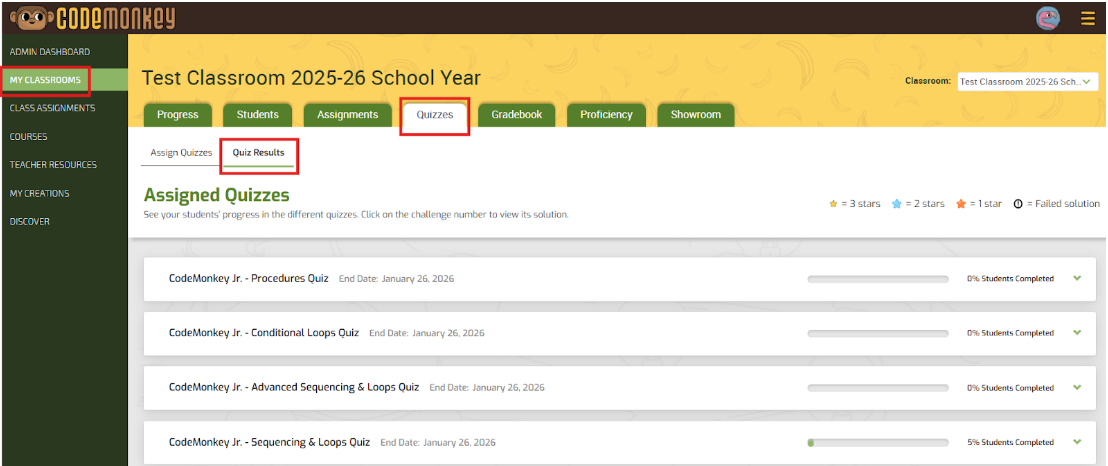
¡Hemos añadido cuestionarios a nuestra biblioteca dirigidos a nuestros prelectores con CodeMonkey Jr.! Hay un cuestionario para cada concepto de programación.
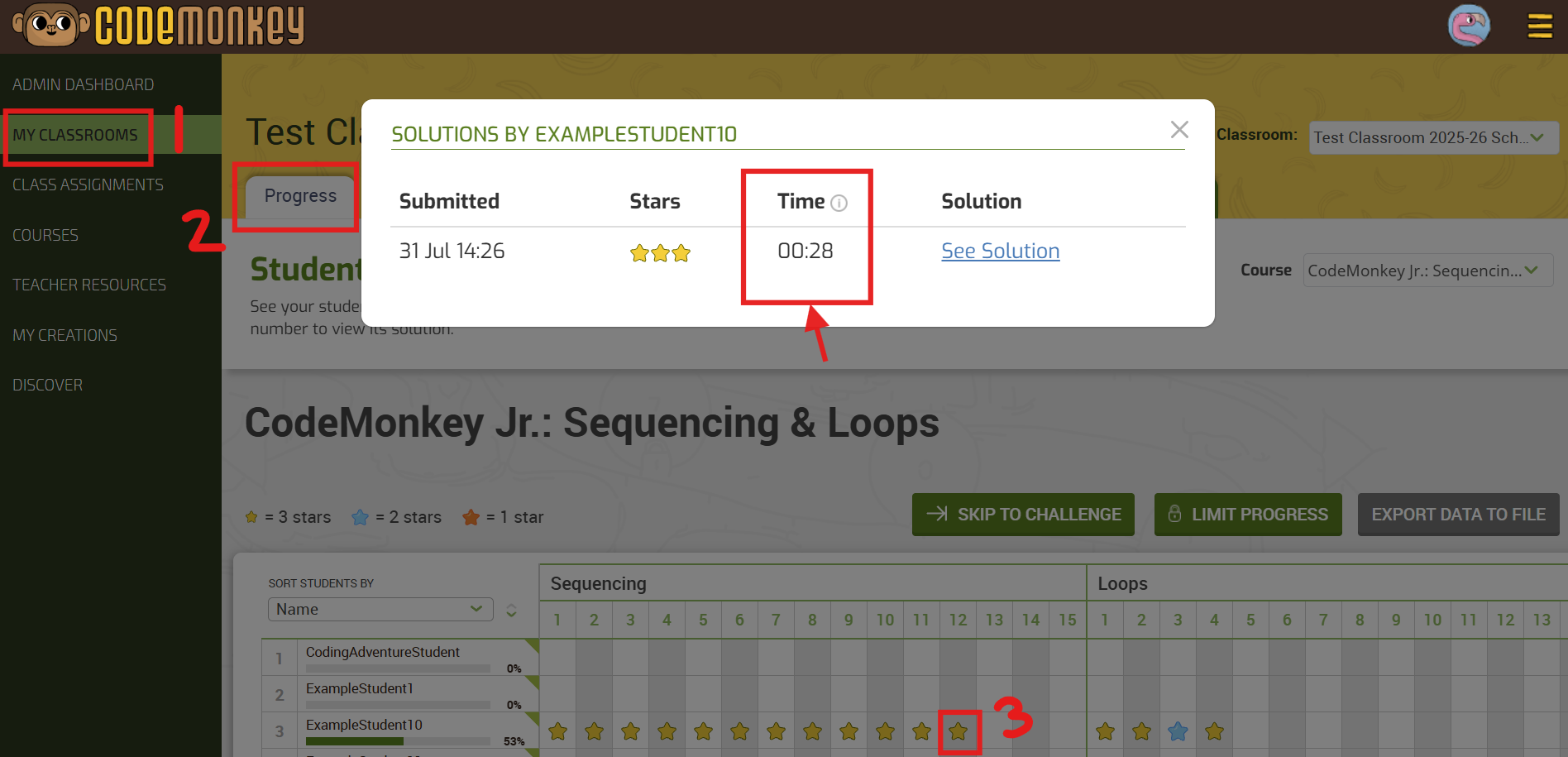
El panel del profesor ahora incluye un punto de datos de "Tiempo de finalización" en la pestaña Progreso. Esta adición ofrece información valiosa sobre los estudiantes.
Manténgase al día sobre las últimas noticias Y MÁS INFORMACIÓN SOBRE CODIFICACIÓN PARA NIÑOS.
Usamos cookies en nuestro sitio web para brindarle la experiencia más relevante recordando sus preferencias y visitas. Al hacer clic en "Aceptar", acepta el uso de TODAS las cookies. Sin embargo, puede visitar la Configuración de cookies para proporcionar un consentimiento controlado.
Política de privacidad y cookies
Resumen de privacidad
Este sitio web utiliza cookies para mejorar su experiencia mientras navega por el sitio web. Fuera de estas cookies, las cookies que se clasifican como necesarias se almacenan en su navegador, ya que son esenciales para el funcionamiento de las funcionalidades básicas del sitio web. También utilizamos cookies de terceros que nos ayudan a analizar y comprender cómo utiliza este sitio web. Estas cookies se almacenarán en su navegador solo con su consentimiento. También tiene la opción de optar por no recibir estas cookies. Pero la exclusión voluntaria de algunas de estas cookies puede afectar su experiencia de navegación.
Las cookies necesarias son absolutamente esenciales para que el sitio web funcione correctamente. Esta categoría solo incluye cookies que garantizan funcionalidades básicas y características de seguridad del sitio web. Estas cookies no almacenan ninguna información personal.
Galleta
Tipo
Duración
Descripción
_codemonkey_session_rails_4
1
1 año
_Georgia
persistente
2 años
Esta cookie es instalada por Google Analytics. La cookie se utiliza para calcular los datos de visitantes, sesiones y campañas y realizar un seguimiento del uso del sitio para el informe de análisis del sitio. Las cookies almacenan información de forma anónima y asignan un número generado aleatoriamente para identificar visitantes únicos.
cookielawinfo-checkbox-publicidad
persistente
11 meses
La cookie se establece mediante el consentimiento de cookies del RGPD para registrar el consentimiento del usuario para las cookies en la categoría "Publicidad".
cookielawinfo-checkbox-analytics
persistente
11 meses
Estas cookies están establecidas por el complemento de WordPress de consentimiento de cookies de GDPR. La cookie se utiliza para recordar el consentimiento del usuario para las cookies en la categoría "Análisis".
cookielawinfo-checkbox-funcional
persistente
11 meses
cookielawinfo-checkbox-required
persistente
11 meses
Esta cookie está configurada por el complemento de consentimiento de cookies de GDPR. Las cookies se utilizan para almacenar el consentimiento del usuario para las cookies en la categoría "Necesarias".
cookielawinfo-checkbox-no necesario
0
11 meses
Esta cookie está configurada por el complemento de consentimiento de cookies de GDPR. Las cookies se utilizan para almacenar el consentimiento del usuario para las cookies en la categoría "No necesarias".
cookielawinfo-checkbox-otro
persistente
11 meses
cookielawinfo-checkbox-performance
persistente
11 meses
Esta cookie se utiliza para realizar un seguimiento de las cookies que el usuario ha aprobado para este sitio.
JSESSIONID
1
1 año
Utilizado por sitios escritos en JSP. Cookies de sesión de plataforma de propósito general que se utilizan para mantener el estado de los usuarios en las solicitudes de página.
view_cookie_policy
persistente
1 hora
La cookie está configurada por el complemento de consentimiento de cookies de GDPR y se utiliza para almacenar si el usuario ha dado su consentimiento o no para el uso de cookies. No almacena ningún dato personal.
XSRF-TOKEN
persistente
1 año
La cookie la establece la plataforma de creación de sitios web de Wix en el sitio web de Wix. La cookie se utiliza con fines de seguridad.
Las cookies que pueden no ser particularmente necesarias para que el sitio web funcione y se utilizan específicamente para recopilar datos personales del usuario a través de análisis, anuncios y otros contenidos integrados se denominan cookies no necesarias. Es obligatorio obtener el consentimiento del usuario antes de ejecutar estas cookies en su sitio web.
Galleta
Tipo
Duración
Descripción
rlas3
persistente
11 meses
La cookie la establece rlcdn.com. La cookie se utiliza para mostrar anuncios relevantes al visitante, así como para limitar el tiempo que el visitante ve una y también para medir la efectividad de la campaña.
UserMatchHistory
persistente
1 mes
Linkedin: se utiliza para rastrear a los visitantes en múltiples sitios web, con el fin de presentar anuncios relevantes según las preferencias del visitante.
Google Analytics establece esta cookie y se utiliza para distinguir usuarios y sesiones. La cookie se crea cuando se ejecuta la biblioteca JavaScript y no existen cookies __utma. La cookie se actualiza cada vez que se envían datos a Google Analytics.
__utmb
persistente
30 minutos
Google Analytics establece la cookie. La cookie se utiliza para determinar nuevas sesiones / visitas. La cookie se crea cuando se ejecuta la biblioteca JavaScript y no existen cookies __utma. La cookie se actualiza cada vez que se envían datos a Google Analytics.
__utmc
persistente
1 año
Google Analytics establece la cookie y se elimina cuando el usuario cierra el navegador. La cookie no es utilizada por ga.js. La cookie se utiliza para permitir la interoperabilidad con urchin.js, que es una versión anterior de Google Analytics y se utiliza junto con la cookie __utmb para determinar nuevas sesiones / visitas.
__utmt
persistente
10 minutos
Google Analytics establece la cookie y se utiliza para acelerar la tasa de solicitud.
__utmz
persistente
6 meses
Google Analytics establece esta cookie y se utiliza para almacenar la fuente de tráfico o la campaña a través de la cual el visitante llegó a su sitio.
_revólver
persistente
1 minuto
Google Universal Analytics instala estas cookies para acelerar la tasa de solicitud y limitar la recopilación de datos en sitios de alto tráfico.
YSC
1
1 año
Estas cookies son establecidas por Youtube y se utilizan para rastrear las vistas de videos incrustados.
Google Analytics utiliza esta cookie para comprender la interacción del usuario con el sitio web.
_gid
persistente
1 día
Esta cookie es instalada por Google Analytics. La cookie se utiliza para almacenar información sobre cómo los visitantes usan un sitio web y ayuda a crear un informe analítico de cómo está funcionando el sitio web. Los datos recopilados, incluido el número de visitantes, la fuente de donde provienen y las páginas, se muestran de forma anónima.
GPS
persistente
30 minutos
Esta cookie la establece Youtube y registra una identificación única para rastrear a los usuarios según su ubicación geográfica.
SEÑOR
persistente
5 meses
Esta cookie se utiliza para medir el uso del sitio web con fines analíticos.
MUIDB
1
1 año
MicroSoft utiliza esta cookie y recopila datos sobre los usuarios que visitan varios sitios web. Estos datos se utilizan para analizar la eficacia de los anuncios en sitios web.
Facebook establece esta cookie para entregar publicidad cuando están en Facebook o en una plataforma digital impulsada por publicidad de Facebook después de visitar este sitio web.
bscookie
1
2 años
Esta cookie es una cookie de identificación del navegador establecida por los botones de compartir vinculados y las etiquetas publicitarias.
fr
1
3 meses
Facebook configura la cookie para mostrar anuncios relevantes a los usuarios y medir y mejorar los anuncios. La cookie también rastrea el comportamiento del usuario en la web en sitios que tienen píxeles de Facebook o complementos sociales de Facebook.
IDE
1
2 años
Utilizado por Google DoubleClick y almacena información sobre cómo el usuario utiliza el sitio web y cualquier otro anuncio antes de visitar el sitio web. Se utiliza para presentar a los usuarios anuncios que son relevantes para ellos de acuerdo con el perfil del usuario.
MUID
persistente
1 año
Usado por Microsoft como identificador único. La cookie se establece mediante scripts integrados de Microsoft. El propósito de esta cookie es sincronizar la identificación en muchos dominios de Microsoft diferentes para permitir el seguimiento de usuarios.
pxrc
persistente
2 meses
El propósito de la cookie es identificar a un visitante para ofrecer publicidad relevante.
rlas3
persistente
11 meses
La cookie la establece rlcdn.com. La cookie se utiliza para mostrar anuncios relevantes al visitante, así como para limitar el tiempo que el visitante ve una y también para medir la efectividad de la campaña.
skimCSP
persistente
11 meses
SkimResources establece esta cookie. La cookie se utiliza para registrar datos sobre el visitante con el fin de optimizar la relevancia de las ventajas que se ofrecen a los usuarios.
TapAd_DID
persistente
2 meses
La cookie la coloca tapad.com. El propósito de la cookie es rastrear a los usuarios en todos los dispositivos para permitir publicidad dirigida
TapAd_TS
persistente
2 meses
Tapad.com establece la cookie. El propósito de la cookie es rastrear a los usuarios en todos los dispositivos para permitir publicidad dirigida.
TDCPM
persistente
1 año
El servicio CloudFare configura la cookie para almacenar una identificación única para identificar un dispositivo de usuarios recurrentes que luego se utiliza para publicidad dirigida.
TDID
persistente
1 año
El servicio CloudFare configura la cookie para almacenar una identificación única para identificar un dispositivo de usuarios recurrentes que luego se utiliza para publicidad dirigida.
test_cookie
persistente
15 minutos
Esta cookie la establece doubleclick.net. El propósito de la cookie es determinar si el navegador de los usuarios admite cookies.
VISITOR_INFO1_LIVE
1
5 meses
Youtube establece esta cookie. Se utiliza para rastrear la información de los videos de YouTube incrustados en un sitio web.
Esta cookie está configurada por linkedIn. El propósito de la cookie es habilitar las funcionalidades de LinkedIn en la página.
lang
persistente
1 año
Esta cookie se utiliza para almacenar las preferencias de idioma de un usuario para ofrecer contenido en ese idioma almacenado la próxima vez que el usuario visite el sitio web.
lidc
persistente
1 día
LinkedIn establece esta cookie y la utiliza para el enrutamiento.