Vitaly es el Gerente de Marketing Digital en CodeMonkey. Su maestría en Informática, combinada con su experiencia como padre de dos hijos, le permite crear contenido enfocado en la formación en programación.
If there’s one word on everyone’s lips in the 2020s, it’s “algorithm.” These elusive strings of code dictate what we see on our social media, the products we see on the homepage of our favorite online shopping sites, and the types of movies and TV shows suggested when we log onto streaming services.
So, why would we be looking for algorithm exercises for kids?
Well, love or hate them, algorithms are here to stay, and they’re changing how we live. And while algoritmos sometimes get a bad rap in the press, they’re actually entirely benign (until they’re not!).
This article is about algorithm exercises for kids — exploring what they are and why mastering them will give your child a distinct advantage.
¿Listo? ¡Vamos!
What is an algorithm?
It’s a great question because there’s a lot of confusion revolving around this very 2020s buzzword.
Essentially:
An algorithm is a set of step-by-step instructions, functions, or rules. And each step guides you closer toward completing a task or solving a problem.
However:
The word “algorithm” is actually nothing new — it was first used in the 9th century. Yes — the 9th century! That’s WAY before the first iPhone (if you can imagine such a time). So, algorithms aren’t just computer code.
Indeed, algorithms are everywhere: from the recipe books on our shelves to the way we solve a math equation; from how we do our laundry or make a phone call.
A laundry algorithm
Let’s think about the processes we might complete to clean dirty clothes — because they don’t jump into the machine and launder themselves (no matter what your kids might think!).
Indeed, before your clothes get cleaned, there are several functions to complete, such as:
Picking the clothes up off the floor
Placing the dirty clothes in a laundry basket. Then, when it comes to laundry day:
Dividing your whites from your colored clothes and separating the machine-wash garments from the hand-wash.
Placing the selected clothes in a wash basket to deliver them to the washing machine.
Putting the clothes in the machine.
Adding detergent and fabric softener.
Selecting an appropriate machine cycle, then switching the machine on.
Waiting for the cycle to complete, then emptying the clothes back into the wash basket.
Taking the clothes to the clothes drier. And waiting for them to dry.
Folding the clothes and returning them to your drawers.
Sticking to the rules
Each stage in this process is essential — if you miss one, the sequence might not work (or go wrong).
For example, you’ll end up with pink shirts if you don’t divide the whites from the colors. And if you put hand-wash-only clothes into the machine, they’ll fit Barbie better than your kids!
However:
We have a basic list of functions, but we must consider the complementary sub-steps of that primary sequence, such as ensuring the washing machine is plugged into the power socket (and the power switch is set to ON).
Otherwise, the whole sequence fails.
An algorithm in simple terms
So, algorithmic coding or programming is composing a list of rules a computer can understand and follow; telling it how to behave.
And once you have your rough list, it’s about ensuring you don’t forget those all-important sub-steps that might prevent the computer from executing the completed task.
How to explain algorithms to kids
It’s probably relatively clear what an algorithm is by now — it’s just a list of instructions. So, get your child to devise instructions for completing a task that offers them a reward, like how to make a slice of peanut butter toast.
They might say:
Put a slice of bread into the toaster (or under the grill).
Open a jar of peanut butter and spread it on the toasted bread.
Take a bite.
And enjoy!
Now, those instructions are probably enough for most humans who have had peanut butter toast before because they know what to expect as the outcome.
But a computer needs greater specificity.
For example, the computer doesn’t know:
Where to find the bread
Where to find the jar of peanut butter
How much bread to use
How thickly sliced the bread should be (if the loaf isn’t pre-sliced)
How to spread peanut butter: what tool do you use?
How much peanut butter to spread (and how thickly)
Whether to use a plate (and what type (and size) of plate).
Then, you might need to explain which part of the peanut butter toast it should bite into — how much is a bite, and how to chew.
So:
Once you have your basic list of instructions, it’s about understanding the additional information a computer needs to complete the operations. And this is the fun part for kids because they love troubleshooting and finding solutions to problems.
What are the components of an algorithm (and how do you explain them to kids?)
Computer algorithms are often written in languages similar to English but might have different syntaxes (how we arrange the words grammatically).
Algorithms commonly instruct computers to:
Carry out a sequence = aka Secuenciación
Make a choice = aka Selection
Repeat a process according to additional rules = Iteration (or looping)
We’ve already talked about sequencing in its simplest terms. So, we’ll explore Selection:
Selection
You can author selection criteria into an algorithm to help the computer make a decision based on specific rules. You can instruct the computer to follow or repeat specific steps or to completely ignore them based on the rules you set out.
For example, the algorithm script for buying a bus ticket might pose a question such as:
How old are you?
If you’re over 65, you’ll pay a different fee or get a free ticket.
Otherwise, you’ll pay the full fare.
These decisions are dictated by easily understood commands, such as SI, THEN, y DEMÁS.
In other words:
IF you’re over 65 years old, THEN you get a free ticket — ELSE pay full fare.
So, with these simple selection criteria, your kids can build those sub-rules that fill in the gaps.
Some algorithm exercises for kids
Here are some group algorithm games that your kids will love:
Target Practice!
Start with a simple image that one child can describe to the rest of the group. I recommend sticking with simple, easily defined geometric shapes, like circles, squares, triangles, etc. Incorporate a range of colors in the image if you can.
You could use a picture of a target like this:
If that looks too complicated, feel free to choose a simpler image — but this is a good challenge for 4-6-year-olds.
The game works like this:
Give one child in the group a piece of paper bearing your chosen image. We’ll call them Child 1.
Hand out pieces of paper and colored pens to the other children in the group. Don’t let the other kids see Child 1’s piece of paper.
Now, ask Child 1 to describe the image to guide the rest of the group to draw it. Encourage them to use numbers, shape names, and colors to describe the image.
Then, everyone shares the image they’ve drawn, discussing how each is similar or different and why that might be.
HOW DOES THIS RELATE TO ALGORITHMS?
The instructions Child A gives to the group are the algorithm. And how similar the other children’s images look relies on the precision and accuracy of their given instructions.
It sounds simple, but children quickly learn how to adapt their language. And this is an excellent inclusive activity for neurodiverse learners and those with a very logical brain.
However, it also depends on the comprehension abilities of the children taking the instructions — representing how different machines might use a different language or understand instructions in slightly different ways.
LEARNING A COMMON LANGUAGE
This is all about adapting language to suit the receiver. For example, university students might describe the first stage as:
Draw three concentric green circles, each one smaller than the previous.
But a child probably doesn’t know the word “concentric,” and they might not be able to describe the function so succinctly. They might say:
Draw a big green circle.
Inside that, draw a smaller green circle.
Inside the smaller green circle, draw another smaller green circle.
So, writing an algorithm is partly:
Understanding the objective, and
Learning the computer’s vernacular (i.e., the language it uses to translate the instruction into an action).
Here’s another algorithm exercise for your kids to try:
Guide the Monkey
This game starts with an obstacle course you could easily set up in your living room or the classroom.
Set up a range of non-hazardous obstacles, such as socks, chairs, or pieces of paper around the room, and get the children into pairs.
Then, blindfold one of the kids (they’re the Monkey) and ask the other (the Instructor) to guide them around the obstacle course, avoiding contact with the obstacles.
You could even place a grid over the floor that dictates how many steps the Monkey needs to make to navigate around, up, and over the obstacle course. And the Instructor can use algorithm commands such as STEP forward/backward/left/right while determining the number of steps.
HOW DOES THIS RELATE TO ALGORITHMS?
This is a great way to teach basic animation algorithms that they can apply to simple computer game coding platforms, such as CódigoMonkey Jr..
Guide the Monkey shows children how to develop instructional language, which comes in super-handy when they come to write algorithms. It also helps children learn the importance of sequencing and strategizing — how might they streamline their process for faster results?
You could even limit the words they’re allowed to use — perhaps just using the words:
Forward
Back
Right
Left
Jump
Steps
And numbers
Paper airplanes
All kids love making paper airplanes, right? Well, now they can turn their origami creativity into algorithmic games!
Get each child to make a paper airplane. Then, ask them to unfold it and write the instructions for making their airplane from scratch. Encourage them to be creative, adding their own flourishes, like drawn symbols and extra folds for more streamlined planes.
Get each child to pass their instructions around the group, asking other kids to make their invention from their algorithm.
You could even challenge them to mix the order of instructions up a bit or miss a step. What happens then?
Egg Carton Lava Game!
Keep things analog with the egg carton lava game. This is an excellent game for playing in pairs.
All you need is:
A large egg carton for 30 eggs. Tape several cartons together to increase the difficulty.
Screwed-up pieces of red paper (the lava)
A green plastic egg
A blue plastic egg
A playing piece, such as an action figure.
Alternatively, you could substitute the plastic eggs for Kinder Surprise Eggs!
Here’s how to set it up:
Place your green egg in one of the slots around the edge of the egg carton.
Place your blue egg in a slot away from the green egg.
Screw up four or five pieces of red paper into balls, and place them in random slots around the egg carton. This is the lava.
Now, encourage one child in the pair to write down the steps the action figure will take to get first to the green egg and then to the blue. Then, ask the other child to follow those steps.
If the instructions work, they win the Kinder egg — if they don’t, they’ll need to streamline the instructions together.
If the action figure ever lands on a lava rock, the game is over, and they’ll need to start again; reassessing their algorithm.
HOW DOES THIS RELATE TO ALGORITHMS?
Ultimately, this activity encourages kids to think like computers and plan their moves in advance. To make the game harder, use a larger grid, and perhaps get older kids to collect as many eggs as possible for different prizes.
When their action figure lands on a lava rock, they need to go back to the planning stage to “debug” their code, which real-life programmers need to do when a piece of code fails to work.
This game offers rewards for accuracy, encouraging children to develop logical thinking and spatial awareness.
Algorithm exercises for kids!
I hope you’ve enjoyed exploring these simple algorithm exercises for kids. Ultimately, consider any fun task that requires a sequential process for successful completion and turn it into an algorithm game, such as:
Making and baking a cake (it will nearly always go wrong if you miss a step)
Tying your shoelaces
Making a cup of coffee or tea
Cleaning the windows
Setting the TV to record a program
Making a sandwich
Climbing a tree
Tidying their bedroom
In fact, if you’re really clever about it, you’ll get a very tidy house and your lunch made for you. All in the name of fun and learning!
Check out our blog for more ideas about algorithms and para niños.
Nuestro mundo actual está experimentando un rápido cambio tecnológico. Esto plantea una pregunta crucial para educadores y directores escolares: ¿cómo podemos preparar a nuestra próxima generación para todas las sorpresas tecnológicas que nos depara el futuro?
Nuestro mundo actual está experimentando un rápido cambio tecnológico. Esto plantea una pregunta crucial para educadores y directores escolares: ¿cómo podemos preparar a nuestra próxima generación para todas las sorpresas tecnológicas que nos depara el futuro?
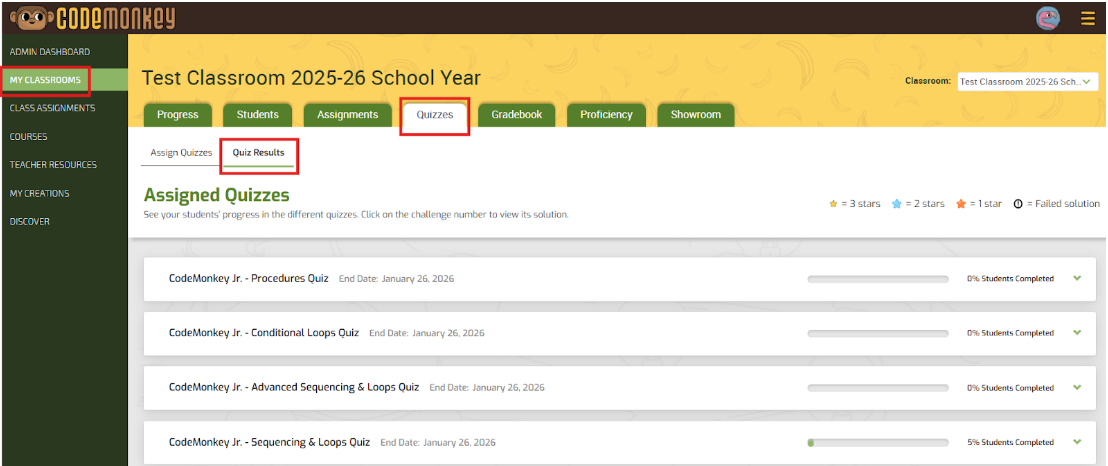
¡Hemos añadido cuestionarios a nuestra biblioteca dirigidos a nuestros prelectores con CodeMonkey Jr.! Hay un cuestionario para cada concepto de programación.
Manténgase al día sobre las últimas noticias Y MÁS INFORMACIÓN SOBRE CODIFICACIÓN PARA NIÑOS.
Usamos cookies en nuestro sitio web para brindarle la experiencia más relevante recordando sus preferencias y visitas. Al hacer clic en "Aceptar", acepta el uso de TODAS las cookies. Sin embargo, puede visitar la Configuración de cookies para proporcionar un consentimiento controlado.
Política de privacidad y cookies
Resumen de privacidad
Este sitio web utiliza cookies para mejorar su experiencia mientras navega por el sitio web. Fuera de estas cookies, las cookies que se clasifican como necesarias se almacenan en su navegador, ya que son esenciales para el funcionamiento de las funcionalidades básicas del sitio web. También utilizamos cookies de terceros que nos ayudan a analizar y comprender cómo utiliza este sitio web. Estas cookies se almacenarán en su navegador solo con su consentimiento. También tiene la opción de optar por no recibir estas cookies. Pero la exclusión voluntaria de algunas de estas cookies puede afectar su experiencia de navegación.
Las cookies necesarias son absolutamente esenciales para que el sitio web funcione correctamente. Esta categoría solo incluye cookies que garantizan funcionalidades básicas y características de seguridad del sitio web. Estas cookies no almacenan ninguna información personal.
Galleta
Tipo
Duración
Descripción
_codemonkey_session_rails_4
1
1 año
_Georgia
persistente
2 años
Esta cookie es instalada por Google Analytics. La cookie se utiliza para calcular los datos de visitantes, sesiones y campañas y realizar un seguimiento del uso del sitio para el informe de análisis del sitio. Las cookies almacenan información de forma anónima y asignan un número generado aleatoriamente para identificar visitantes únicos.
cookielawinfo-checkbox-publicidad
persistente
11 meses
La cookie se establece mediante el consentimiento de cookies del RGPD para registrar el consentimiento del usuario para las cookies en la categoría "Publicidad".
cookielawinfo-checkbox-analytics
persistente
11 meses
Estas cookies están establecidas por el complemento de WordPress de consentimiento de cookies de GDPR. La cookie se utiliza para recordar el consentimiento del usuario para las cookies en la categoría "Análisis".
cookielawinfo-checkbox-funcional
persistente
11 meses
cookielawinfo-checkbox-required
persistente
11 meses
Esta cookie está configurada por el complemento de consentimiento de cookies de GDPR. Las cookies se utilizan para almacenar el consentimiento del usuario para las cookies en la categoría "Necesarias".
cookielawinfo-checkbox-no necesario
0
11 meses
Esta cookie está configurada por el complemento de consentimiento de cookies de GDPR. Las cookies se utilizan para almacenar el consentimiento del usuario para las cookies en la categoría "No necesarias".
cookielawinfo-checkbox-otro
persistente
11 meses
cookielawinfo-checkbox-performance
persistente
11 meses
Esta cookie se utiliza para realizar un seguimiento de las cookies que el usuario ha aprobado para este sitio.
JSESSIONID
1
1 año
Utilizado por sitios escritos en JSP. Cookies de sesión de plataforma de propósito general que se utilizan para mantener el estado de los usuarios en las solicitudes de página.
view_cookie_policy
persistente
1 hora
La cookie está configurada por el complemento de consentimiento de cookies de GDPR y se utiliza para almacenar si el usuario ha dado su consentimiento o no para el uso de cookies. No almacena ningún dato personal.
XSRF-TOKEN
persistente
1 año
La cookie la establece la plataforma de creación de sitios web de Wix en el sitio web de Wix. La cookie se utiliza con fines de seguridad.
Las cookies que pueden no ser particularmente necesarias para que el sitio web funcione y se utilizan específicamente para recopilar datos personales del usuario a través de análisis, anuncios y otros contenidos integrados se denominan cookies no necesarias. Es obligatorio obtener el consentimiento del usuario antes de ejecutar estas cookies en su sitio web.
Galleta
Tipo
Duración
Descripción
rlas3
persistente
11 meses
La cookie la establece rlcdn.com. La cookie se utiliza para mostrar anuncios relevantes al visitante, así como para limitar el tiempo que el visitante ve una y también para medir la efectividad de la campaña.
UserMatchHistory
persistente
1 mes
Linkedin: se utiliza para rastrear a los visitantes en múltiples sitios web, con el fin de presentar anuncios relevantes según las preferencias del visitante.
Google Analytics establece esta cookie y se utiliza para distinguir usuarios y sesiones. La cookie se crea cuando se ejecuta la biblioteca JavaScript y no existen cookies __utma. La cookie se actualiza cada vez que se envían datos a Google Analytics.
__utmb
persistente
30 minutos
Google Analytics establece la cookie. La cookie se utiliza para determinar nuevas sesiones / visitas. La cookie se crea cuando se ejecuta la biblioteca JavaScript y no existen cookies __utma. La cookie se actualiza cada vez que se envían datos a Google Analytics.
__utmc
persistente
1 año
Google Analytics establece la cookie y se elimina cuando el usuario cierra el navegador. La cookie no es utilizada por ga.js. La cookie se utiliza para permitir la interoperabilidad con urchin.js, que es una versión anterior de Google Analytics y se utiliza junto con la cookie __utmb para determinar nuevas sesiones / visitas.
__utmt
persistente
10 minutos
Google Analytics establece la cookie y se utiliza para acelerar la tasa de solicitud.
__utmz
persistente
6 meses
Google Analytics establece esta cookie y se utiliza para almacenar la fuente de tráfico o la campaña a través de la cual el visitante llegó a su sitio.
_revólver
persistente
1 minuto
Google Universal Analytics instala estas cookies para acelerar la tasa de solicitud y limitar la recopilación de datos en sitios de alto tráfico.
YSC
1
1 año
Estas cookies son establecidas por Youtube y se utilizan para rastrear las vistas de videos incrustados.
Google Analytics utiliza esta cookie para comprender la interacción del usuario con el sitio web.
_gid
persistente
1 día
Esta cookie es instalada por Google Analytics. La cookie se utiliza para almacenar información sobre cómo los visitantes usan un sitio web y ayuda a crear un informe analítico de cómo está funcionando el sitio web. Los datos recopilados, incluido el número de visitantes, la fuente de donde provienen y las páginas, se muestran de forma anónima.
GPS
persistente
30 minutos
Esta cookie la establece Youtube y registra una identificación única para rastrear a los usuarios según su ubicación geográfica.
SEÑOR
persistente
5 meses
Esta cookie se utiliza para medir el uso del sitio web con fines analíticos.
MUIDB
1
1 año
MicroSoft utiliza esta cookie y recopila datos sobre los usuarios que visitan varios sitios web. Estos datos se utilizan para analizar la eficacia de los anuncios en sitios web.
Facebook establece esta cookie para entregar publicidad cuando están en Facebook o en una plataforma digital impulsada por publicidad de Facebook después de visitar este sitio web.
bscookie
1
2 años
Esta cookie es una cookie de identificación del navegador establecida por los botones de compartir vinculados y las etiquetas publicitarias.
fr
1
3 meses
Facebook configura la cookie para mostrar anuncios relevantes a los usuarios y medir y mejorar los anuncios. La cookie también rastrea el comportamiento del usuario en la web en sitios que tienen píxeles de Facebook o complementos sociales de Facebook.
IDE
1
2 años
Utilizado por Google DoubleClick y almacena información sobre cómo el usuario utiliza el sitio web y cualquier otro anuncio antes de visitar el sitio web. Se utiliza para presentar a los usuarios anuncios que son relevantes para ellos de acuerdo con el perfil del usuario.
MUID
persistente
1 año
Usado por Microsoft como identificador único. La cookie se establece mediante scripts integrados de Microsoft. El propósito de esta cookie es sincronizar la identificación en muchos dominios de Microsoft diferentes para permitir el seguimiento de usuarios.
pxrc
persistente
2 meses
El propósito de la cookie es identificar a un visitante para ofrecer publicidad relevante.
rlas3
persistente
11 meses
La cookie la establece rlcdn.com. La cookie se utiliza para mostrar anuncios relevantes al visitante, así como para limitar el tiempo que el visitante ve una y también para medir la efectividad de la campaña.
skimCSP
persistente
11 meses
SkimResources establece esta cookie. La cookie se utiliza para registrar datos sobre el visitante con el fin de optimizar la relevancia de las ventajas que se ofrecen a los usuarios.
TapAd_DID
persistente
2 meses
La cookie la coloca tapad.com. El propósito de la cookie es rastrear a los usuarios en todos los dispositivos para permitir publicidad dirigida
TapAd_TS
persistente
2 meses
Tapad.com establece la cookie. El propósito de la cookie es rastrear a los usuarios en todos los dispositivos para permitir publicidad dirigida.
TDCPM
persistente
1 año
El servicio CloudFare configura la cookie para almacenar una identificación única para identificar un dispositivo de usuarios recurrentes que luego se utiliza para publicidad dirigida.
TDID
persistente
1 año
El servicio CloudFare configura la cookie para almacenar una identificación única para identificar un dispositivo de usuarios recurrentes que luego se utiliza para publicidad dirigida.
test_cookie
persistente
15 minutos
Esta cookie la establece doubleclick.net. El propósito de la cookie es determinar si el navegador de los usuarios admite cookies.
VISITOR_INFO1_LIVE
1
5 meses
Youtube establece esta cookie. Se utiliza para rastrear la información de los videos de YouTube incrustados en un sitio web.
Esta cookie está configurada por linkedIn. El propósito de la cookie es habilitar las funcionalidades de LinkedIn en la página.
lang
persistente
1 año
Esta cookie se utiliza para almacenar las preferencias de idioma de un usuario para ofrecer contenido en ese idioma almacenado la próxima vez que el usuario visite el sitio web.
lidc
persistente
1 día
LinkedIn establece esta cookie y la utiliza para el enrutamiento.