Ilya is the Marketing Manager at CodeMonkey. Passionate about educational technology and digital learning, he focuses on making coding accessible and engaging for students worldwide.
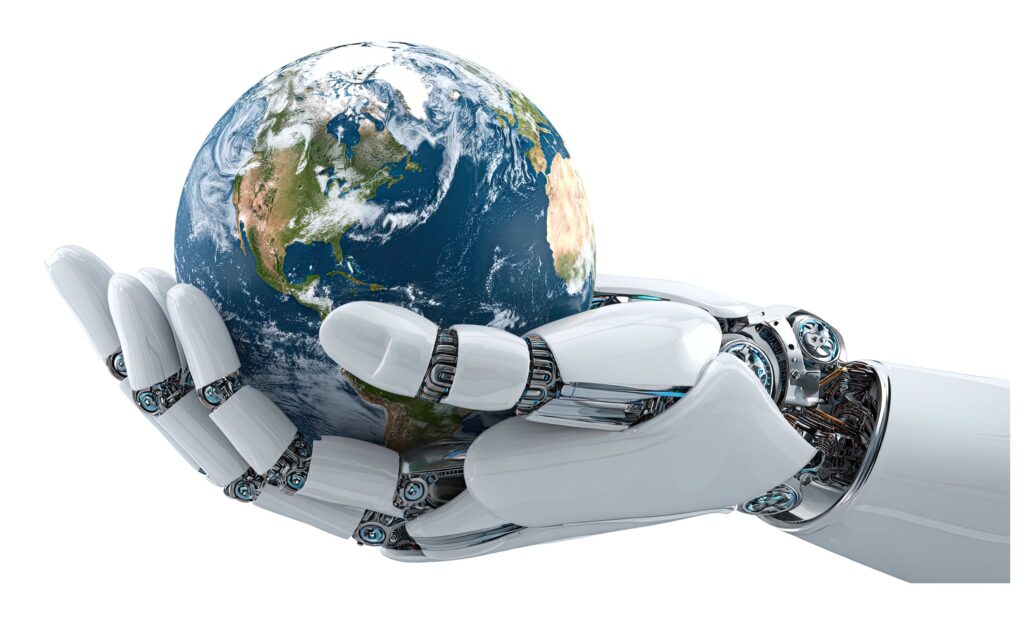
Is AI Replacing Coding? What Kids Actually Need to Learn in the Age of Artificial Intelligence
Ever since tools and AI assistants like Claude, ChatGPT, Google Gemini and others became popular and entered the mainstream, a lot of parents began asking the same question:
“Do my kids still need to learn coding, if AI can write the code instead?”
That is a valid question. Artificial Intelligence tools had gone a long way, and now can create games and websites, write Python scripts and even help experienced software developers complete programming tasks a lot faster than before. No wonder so many parents wonder: “If AI is doing all the coding, what is the point to teaching my children programming”?
Well, there is the short answer and the long one. The short answer is simple:
AI is not replacing coding. It is changing the meaning of a successful coder.
In fact, it’s even more important now to acquire programming skills. Yes, in the future nobody will write thousands of lines of code manually. But to understand how technology works in AI-powered world – that knowledge will be essential and priceless.
And now for the long answer – let’s dive into exploring what students really need to learn and why coding for kids will remain one of the most valuable and important educational investment a parent can make.
The Myth: Artificial Intelligence Will Replace Programmers
People always predict the end of “old skills” whenever a new technology emerges.
With the development of calculators, a lot of people feared students won’t learn mathematics anymore.
When search engines appeared, parents thought children won’t memorize information anymore.
When computers became available for everybody in the classrooms, most of the people thought that will be the end of “traditional learning”.
None of it happened. None of these predictions came through. Instead, the skills evolved into something more advanced and useful.
Same thing is happening with coding. True, AI can generate code. But Artificial Intelligence cannot grasp the whole picture. It cannot understand context, creativity, goals or human specific needs. Only people can.
If you ask AI to build a game that teaches 10-year-olds fractions, the AI will produce some code. But to transfer this code into a real product you still need a human. Because you need to:
Define the learning objectives
Design the game mechanics
Test the experience
Improve the gameplay
Understand what children enjoy
The code itself is only a small and you might say insignificant part of the whole process. The real value comes from a human – his logic, creativity and way of thinking.
AI Makes Mistakes – And Someone Has to Catch Them
One of the biggest delusions about Artificial Intelligence is that it always produces the right answer – simply put, people think that AI cannot be wrong. There cannot be anything further from the truth. Today’s AI tools are incredibly powerful, but they are very far from perfect.
AI can write code quickly, but it comes with a price. This code can contain bugs, security issues or simply not solving the problem it was asked to. A lot of professional software developers even have a name for this phenomenon – moments when AI with a 100% confidence provides false information or produce code that looks correct but doesn’t’ work – they call it “AI hallucinations”.
This is one of the reasons why coding knowledge is becoming more valuable, not less. A student who understands programming can review the code, that was generated by AI, find the mistakes, correct them and improve the final output. While a student that has no coding knowledge can simply assume that AI is always right.
That’s why learning coding for kids isn’t about competing with artificial intelligence – you can’t. It’s about teaching kids to think independently – so they can understand and evaluate the technology and not blindly trust it.
AI becomes a bigger part of our life. That’s a fact. In this AI-powered world, the ability to ask, “Does this actually make sense?” becomes one of the most valuable skills that a child can learn and develop.
Coding Is Becoming More Important, Not Less
Most of the expert believe AI will increase the demand for people who understand coding and computer science, because artificial intelligence works best when it’s guided by a person who understand technology.
A person who knows programming can:
Improve AI-generated code
Spot mistakes
Fix bugs
Ask better questions
Create more sophisticated projects
While a person who doesn’t understand coding usually has no way of knowing whether AI is right or wrong.
Going back to one of our previous examples – think of AI as a calculator: if you know, how to use the calculator, it’s helpful. But if you understand mathematics, a calculator becomes a powerful tool. You can apply the same logic to coding and AI.
Coding Teaches Kids How Technology Really Works
Nowadays children grow up surrounded by technology. They use smartphones, smart TV, tablets, video games and voice assistants every day. Most of the kids interact with AI-powered tools even before they understand what artificial intelligence is.
Still, using technology is not the same as understanding it. That why it’s important to learn how to code – it helps children to look “behind the screen”. They begin to realize and understand why games behave they do, how apps process information, and how websites respond to clicks. Instead of being passive users, they become active creators.
This shift in the children’s mindset is utterly important. When kids realize they can build technology instead of just consuming it, the see themselves differently – as problem-solvers and innovators. And even if they won’t choose a career in software development, but rather choose a different path – medicine, business, education, engineering – they can shape they way of approaching challenges throughout their lives. That confidence is everything.
What Students Actually Need to Learn
Everybody understands that the future isn’t about memorizing programming syntax anymore. Instead, student needs a wider set of skills, that will combine coding, problem-solving and creativity.
Computational Thinking
Computational thinking is the ability to break large problems into a smaller and manageable pieces.
For example, instead of saying: “I want to build a game”, students learn to think:
What is the goal?
Who will be the main player?
What happens when the player wins or loses?
How does scoring work?
This structured way of thinking is useful far beyond coding – it helps children become better problem-solvers in schools and in life in general.
Logic and Reasoning
Coding teaches children how to think logically. When a program doesn’t work, students learn to:
Identify the issue / problem
Test different solutions
Analize results
Try again
These skills eventually build resilience and critical thinking. In a world increasingly influenced by AI, logical reasoning becomes one of the most important tools a student can have, because they must evaluate, whether AI-generated answers make sense or not.
Creativity
Many people think programming is purely technical. They cannot be more wrong. In reality coding is highly creative.
Students create:
Websites
Games
Apps
Animations
Interactive stories
Artificial Intelligence can help with these projects, but all the creativity still comes from the human mind. Children who learn to code from an early age, develop the confidence to transform ideas into reality, as they become older. That’s a very powerful skill in any career they will choose in the future.
Digital Literacy
Future generation won’t just simply use technology – they’ll work and live alongside AI systems. That means understanding technology is becoming as important as reading and writing. Learning to code from an early age helps students understand:
How websites operate
How software works
How apps are built
How AI systems function
This knowledge helps children become informed and active digital citizens rather than passive consumers of technology
Why Coding for Kids Still Matters
Parents often ask whether coding classes for kids are still important in a world where AI can generate code. The answer is simple – yes, and now more than ever. Learning to code is not simply about a career, preparing children to become software engineers. It about helping them develop important skills such as:
Creativity
Persistence
Problem-Solving skills
Communication
Logical thinking
Regardless of a career choice, those skills are valuable. A future architect, scientist, doctor, teacher or entrepreneur – all can benefit from understanding coding concepts.
AI and Coding: Partners, Not Competitors
Maybe the biggest misconception is that students must choose between learning coding and learning AI. In reality, these subjects work together well, because the best way to understand AI is through coding.
When children learn programming, they are getting familiar with concepts such as:
Data
Algorithms
Automation
Logic
Machine learning fundamentals
These ideas form the foundation of modern AI. Rather than replacing coding, Artificial intelligence gives students another reason to learn it.
What Employers Will Look for in the Future
We cannot know what the future holds. It’s possible, and even probable that many future jobs haven’t even been invented yet. However, most of the experts agree on one thing: technology will be even more important aspect of everybody’s life, and the ability to work with technology will be increasingly valuable. That’s why future employers will prioritize candidates who can:
Collaborate with AI systems
Think Critically
Adapt quickly to new tools
Learn continuously
Solve complex problems
Coding education helps students to acquire all these qualities. Again – the goal is not to compete against AI, the goal is to learn to work alongside it.
Why Kids Have an Advantage
Children often can learn technology faster than adults. They’re naturally curious, more willing to experiment and not afraid to make mistakes. They also don’t need to understand complicate and advanced computer science concepts right away – they can learn gradually and build confidence with time.
That where CodeMonkey can help, because in our platform through game-based learning, kids can explore programming concepts in an engaging and enjoyable environment at their own pace.
How CodeMonkey Helps Kids Learn Coding in the Age of AI
At CodeMonkey, we believe coding education is now more relevant than ever. Here’s why:
CodeMonkey’s mission is not just teaching children how to type code. The important part is to help students develop the skills that matter the most in today’s world, which is very technology driven.
Through engaging, game-based lessons, students will learn:
Creativity
Problem-solving
Computational thinking
Logical reasoning
Coding fundamentals
Our courses our suited for everybody. Children begin with beginner-friendly concepts toward more advanced web development and real programming languages such as Python and JavaScript.
Children will build games, solve puzzles and create projects, which will give them the hands-on experience that prepares them for future learning.
And the most important part – children will learn how technology work behind the scenes. Artificial intelligence is constantly evolving, and that’s why this understanding becomes increasingly valuable.
Should Parents Worry About AI Replacing Coding?
There is a very short answer to this question: no. But it’s probably not the right question to ask. The better question is: how can we prepare our children to thrive in a world where AI exists?
And the answer is not by avoiding coding but helping children understand technology at a deeper level. Because AI tools will continue to improve – they will write better code and automate more tasks. But the people who will know how to use those tools in the most effective way will succeed. And coding education provides that foundation.
AI Is a Tool – Just Like a Calculator
Artificial intelligence is often compared to having an incredibly proficient assistant. It can write code, generate ideas and explain concepts. It can even help debug programs. But it doesn’t eradicate the need to learn programming – just like a calculator cannot replace the need of understanding mathematics.
Let’s give an example: we are giving two students access to Chat GPT. First student never wrote a line of code in his life. The second student spent a few years learning programming through engaged coding challenges and real projects.
Both are facing a task: creating a simple game. They ask AI, who produce almost identical code for both. But what happens now?
The student with no coding knowledge will struggle to understand why the game isn’t working the way it was expected. The second, experienced student, can read the code, modify it, improve it and ask AI better follow-up questions.
And that is the big difference. Artificial Intelligence cannot replace expertise – it amplifies it. The more knowledge a student has, the better they can use AI as a creative partner.
Final Thoughts
Artificial Intelligence will continue to change our future. It will change the way people work, learn and create. The students that most likely to succeed will be those who understand how technology work, think critically and use AI as a tool, and not as a shortcut – not the students that will memorize the most coding syntax.
That’s why coding for kids is so important. It’s about building confidence, creativity, adaptability and the ability to solve problems – not just preparing future programmers and software engineers.
At CodeMonkey, we’re excited about the future of AI. We don’t see it as a replacement for learning – we see it as another reason to develop strong coding and computational skills. The earlier the children will begin, the more prepared they’ll be to shape tomorrow’s technology instead of just using it.
Stay Up To Date on The Latest NEWS AND LEARN MORE ABOUT CODING FOR KIDS.
We use cookies on our website to give you the most relevant experience by remembering your preferences and repeat visits. By clicking “Accept”, you consent to the use of ALL the cookies. However you may visit Cookie Settings to provide a controlled consent.
This website uses cookies to improve your experience while you navigate through the website. Out of these cookies, the cookies that are categorized as necessary are stored on your browser as they are essential for the working of basic functionalities of the website. We also use third-party cookies that help us analyze and understand how you use this website. These cookies will be stored in your browser only with your consent. You also have the option to opt-out of these cookies. But opting out of some of these cookies may have an effect on your browsing experience.
Necessary cookies are absolutely essential for the website to function properly. This category only includes cookies that ensures basic functionalities and security features of the website. These cookies do not store any personal information.
Cookie
Type
Duration
Description
_codemonkey_session_rails_4
1
1 year
_ga
persistent
2 years
This cookie is installed by Google Analytics. The cookie is used to calculate visitor, session, campaign data and keep track of site usage for the site's analytics report. The cookies store information anonymously and assign a randomly generated number to identify unique visitors.
cookielawinfo-checkbox-advertisement
persistent
11 months
The cookie is set by GDPR cookie consent to record the user consent for the cookies in the category "Advertisement".
cookielawinfo-checkbox-analytics
persistent
11 months
This cookies is set by GDPR Cookie Consent WordPress Plugin. The cookie is used to remember the user consent for the cookies under the category "Analytics".
cookielawinfo-checkbox-functional
persistent
11 months
cookielawinfo-checkbox-necessary
persistent
11 months
This cookie is set by GDPR Cookie Consent plugin. The cookies is used to store the user consent for the cookies in the category "Necessary".
cookielawinfo-checkbox-non-necessary
0
11 months
This cookie is set by GDPR Cookie Consent plugin. The cookies is used to store the user consent for the cookies in the category "Non Necessary".
cookielawinfo-checkbox-other
persistent
11 months
cookielawinfo-checkbox-performance
persistent
11 months
This cookie is used to keep track of which cookies the user have approved for this site.
JSESSIONID
1
1 year
Used by sites written in JSP. General purpose platform session cookies that are used to maintain users' state across page requests.
viewed_cookie_policy
persistent
1 hour
The cookie is set by the GDPR Cookie Consent plugin and is used to store whether or not user has consented to the use of cookies. It does not store any personal data.
XSRF-TOKEN
persistent
1 year
The cookie is set by Wix website building platform on Wix website. The cookie is used for security purposes.
Any cookies that may not be particularly necessary for the website to function and is used specifically to collect user personal data via analytics, ads, other embedded contents are termed as non-necessary cookies. It is mandatory to procure user consent prior to running these cookies on your website.
Cookie
Type
Duration
Description
rlas3
persistent
11 months
The cookie is set by rlcdn.com. The cookie is used to serve relevant ads to the visitor as well as limit the time the visitor sees an and also measure the effectiveness of the campaign.
UserMatchHistory
persistent
1 month
Linkedin - Used to track visitors on multiple websites, in order to present relevant advertisement based on the visitor's preferences.
This cookie is set by Google Analytics and is used to distinguish users and sessions. The cookie is created when the JavaScript library executes and there are no existing __utma cookies. The cookie is updated every time data is sent to Google Analytics.
__utmb
persistent
30 minutes
The cookie is set by Google Analytics. The cookie is used to determine new sessions/visits. The cookie is created when the JavaScript library executes and there are no existing __utma cookies. The cookie is updated every time data is sent to Google Analytics.
__utmc
persistent
1 year
The cookie is set by Google Analytics and is deleted when the user closes the browser. The cookie is not used by ga.js. The cookie is used to enable interoperability with urchin.js which is an older version of Google analytics and used in conjunction with the __utmb cookie to determine new sessions/visits.
__utmt
persistent
10 minutes
The cookie is set by Google Analytics and is used to throttle request rate.
__utmz
persistent
6 months
This cookie is set by Google analytics and is used to store the traffic source or campaign through which the visitor reached your site.
_gat
persistent
1 minute
This cookies is installed by Google Universal Analytics to throttle the request rate to limit the colllection of data on high traffic sites.
YSC
1
1 year
This cookies is set by Youtube and is used to track the views of embedded videos.
This cookie is used by Google Analytics to understand user interaction with the website.
_gid
persistent
1 day
This cookie is installed by Google Analytics. The cookie is used to store information of how visitors use a website and helps in creating an analytics report of how the wbsite is doing. The data collected including the number visitors, the source where they have come from, and the pages viisted in an anonymous form.
GPS
persistent
30 minutes
This cookie is set by Youtube and registers a unique ID for tracking users based on their geographical location
MR
persistent
5 months
This cookie is used to measure the use of the website for analytics purposes.
MUIDB
1
1 year
This cookie is used by MicroSoft and collects data about users of visits on multiple website. This data is used to analyze the efficiency of advertisements on websites.
This cookie is set by Facebook to deliver advertisement when they are on Facebook or a digital platform powered by Facebook advertising after visiting this website.
bscookie
1
2 years
This cookie is a browser ID cookie set by Linked share Buttons and ad tags.
fr
1
3 months
The cookie is set by Facebook to show relevant advertisments to the users and measure and improve the advertisements. The cookie also tracks the behavior of the user across the web on sites that have Facebook pixel or Facebook social plugin.
IDE
1
2 years
Used by Google DoubleClick and stores information about how the user uses the website and any other advertisement before visiting the website. This is used to present users with ads that are relevant to them according to the user profile.
MUID
persistent
1 year
Used by Microsoft as a unique identifier. The cookie is set by embedded Microsoft scripts. The purpose of this cookie is to synchronize the ID across many different Microsoft domains to enable user tracking.
pxrc
persistent
2 months
The purpose of the cookie is to identify a visitor to serve relevant advertisement.
rlas3
persistent
11 months
The cookie is set by rlcdn.com. The cookie is used to serve relevant ads to the visitor as well as limit the time the visitor sees an and also measure the effectiveness of the campaign.
skimCSP
persistent
11 months
This cookie is set by SkimResources. The cookie is used to record data on the visitor to optimize the relevance of the advretisements served to the users.
TapAd_DID
persistent
2 months
The cookie is set by tapad.com. The purpose of the cookie is to track users across devices to enable targeted advertising
TapAd_TS
persistent
2 months
The cookie is set by Tapad.com. The purpose of the cookie is to track users across devices to enable targeted advertising.
TDCPM
persistent
1 year
The cookie is set by CloudFare service to store a unique ID to identify a returning users device which then is used for targeted advertising.
TDID
persistent
1 year
The cookie is set by CloudFare service to store a unique ID to identify a returning users device which then is used for targeted advertising.
test_cookie
persistent
15 minutes
This cookie is set by doubleclick.net. The purpose of the cookie is to determine if the users' browser supports cookies.
VISITOR_INFO1_LIVE
1
5 months
This cookie is set by Youtube. Used to track the information of the embedded YouTube videos on a website.