Grade 3 Science

100% Free for Schools, All School Year

From forces and magnets to ecosystems, life cycles, and weather, our Grade 3 science courses turn big questions into engaging, screen-based discoveries.

ap computer science
codemonkey ready to teach

Real Science Thinking, Made Approachable

Students build genuine scientific reasoning skills: observing, predicting, testing, and explaining, through interactive lessons designed just for 3rd-grade learners.
codemonkey ready to learn how to program

Learn Anywhere, On Any Device

All that's needed is an internet-enabled device and an individual student account. Courses run smoothly on desktops, laptops, Chromebooks, and tablets.

Virtual Labs That Feel Like the Real Thing

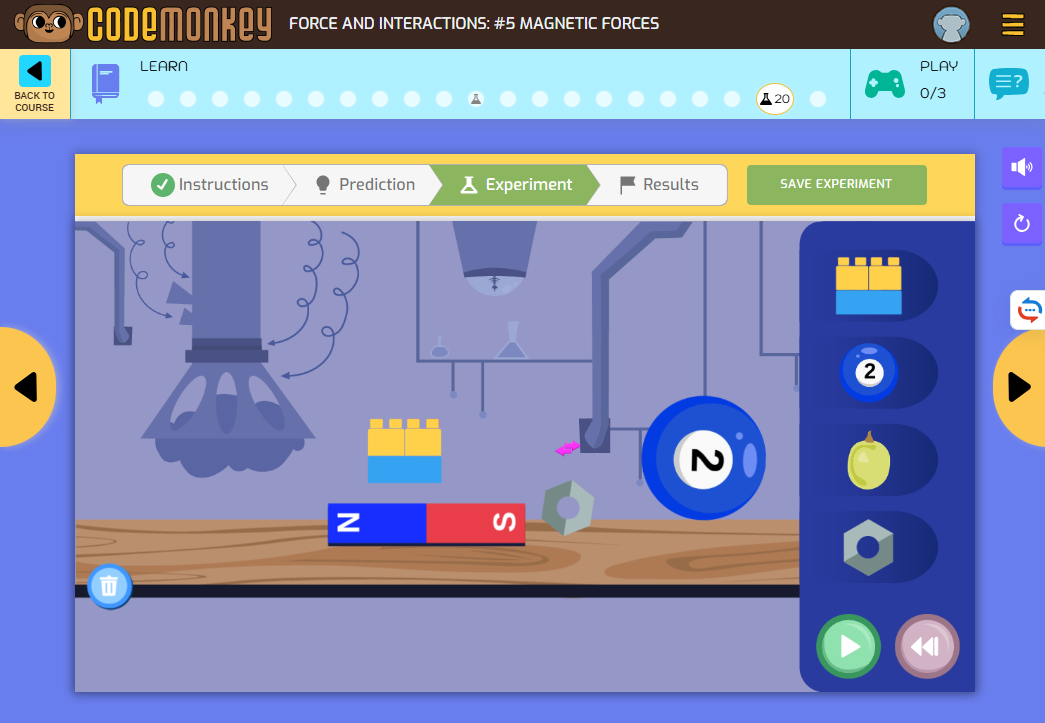
Kids don't just read about science — they experiment with it. Interactive simulations let students test variables, observe results, and draw their own conclusions.

codemonkey ready to teach

Learning That Feels Like Play

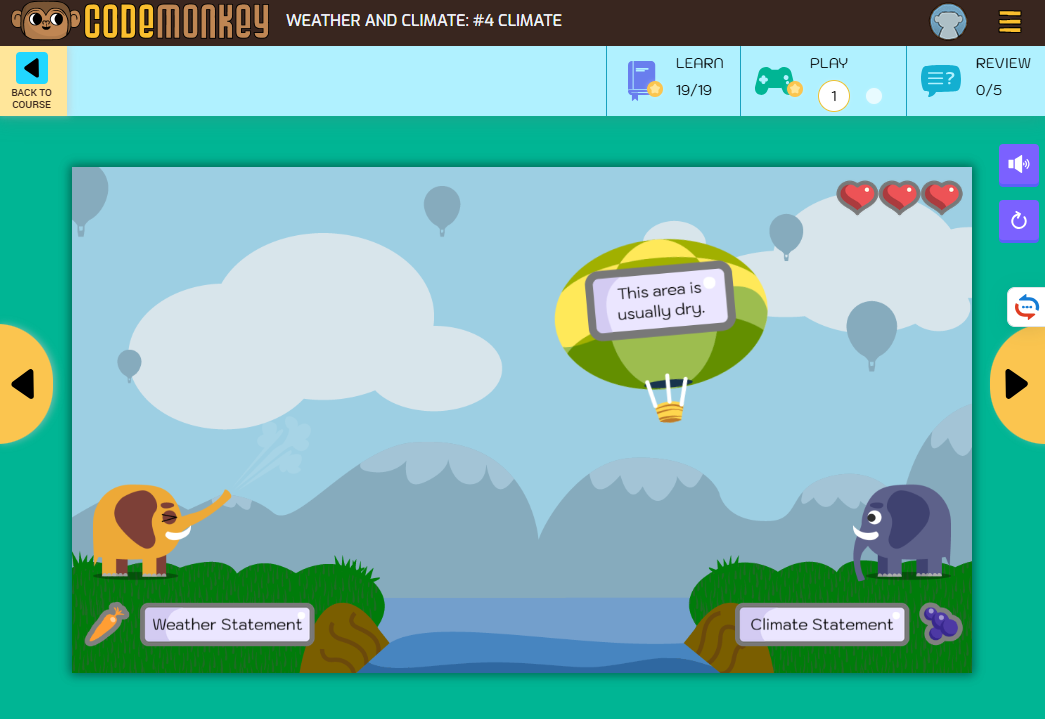
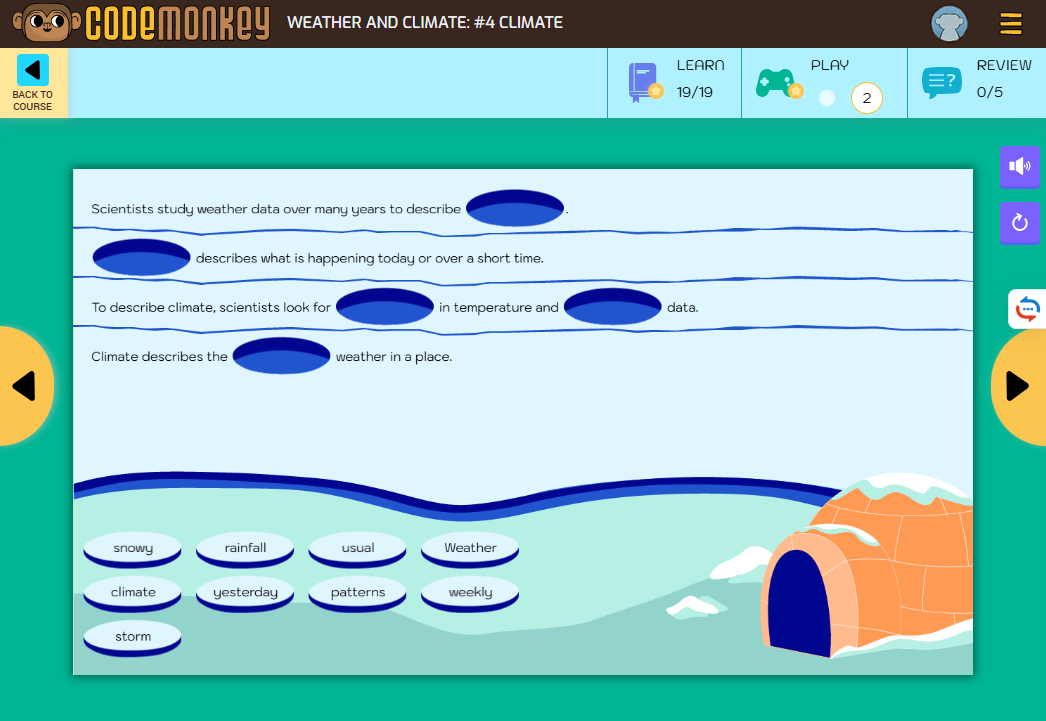
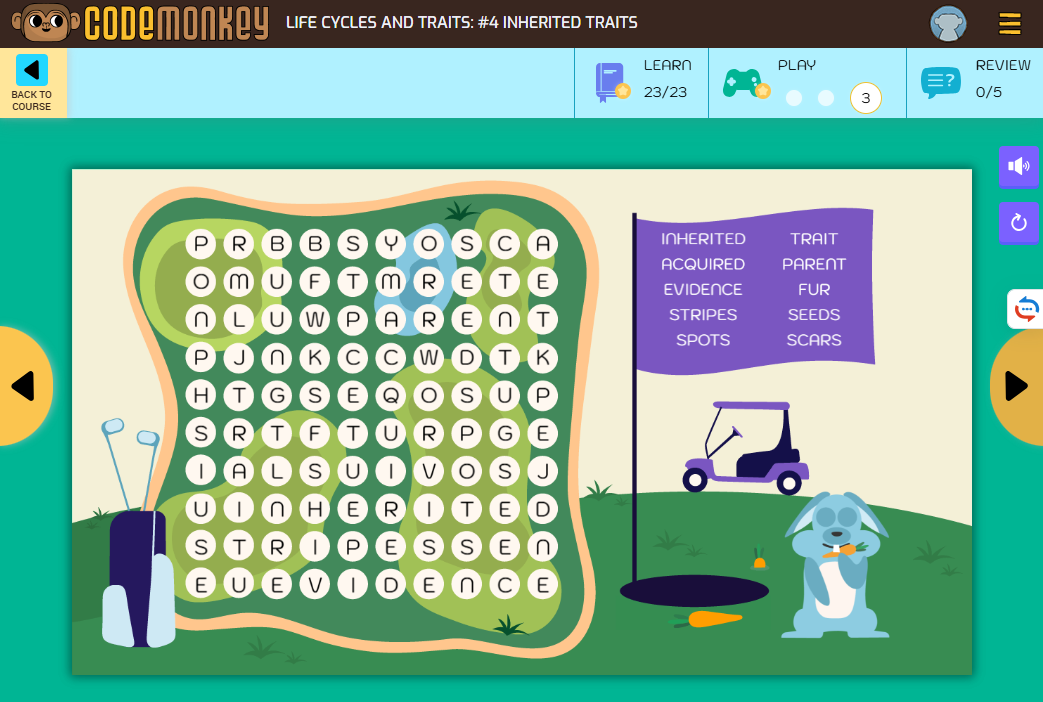
Mini-games reinforce every lesson's concepts, turning review into something kids actually look forward to.

codemonkey ready to learn how to program

Built-In Progress Checks

Five review questions close out every lesson, and each course wraps up with a printable 15-question assessment — giving teachers a clear picture of understanding along the way.

Free for Your Whole School, All Year Long

No licensing fees, no per-student costs — just sign up and give every classroom full access to the entire Grade 3 science curriculum for the whole school year.
Hands-on Science,

built for 3rd graders

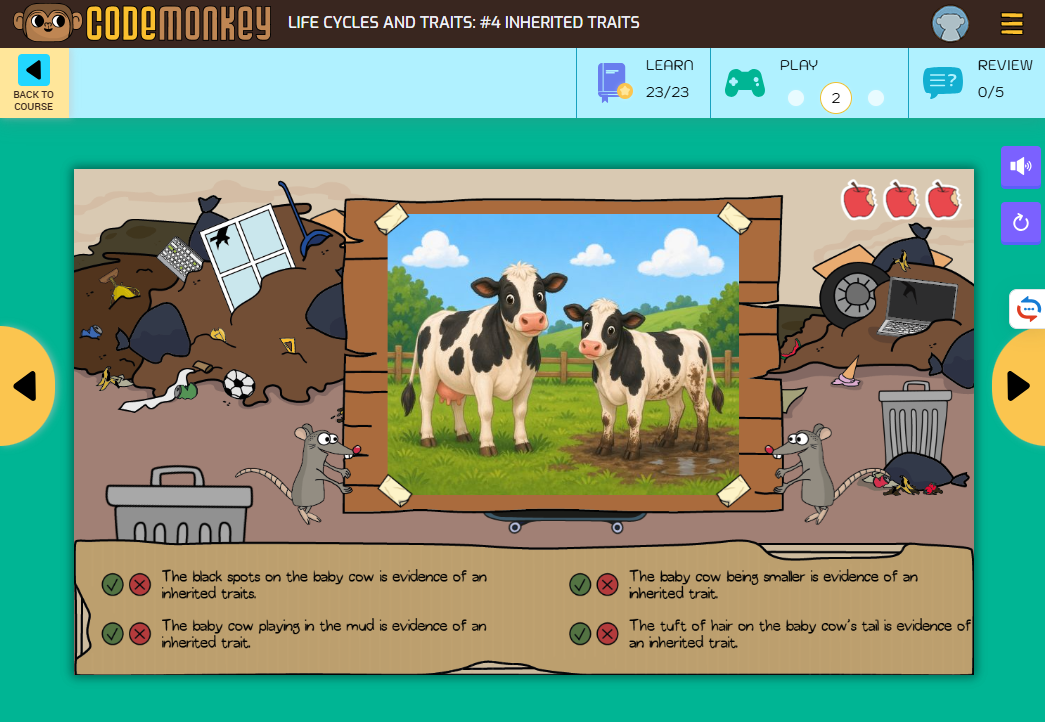
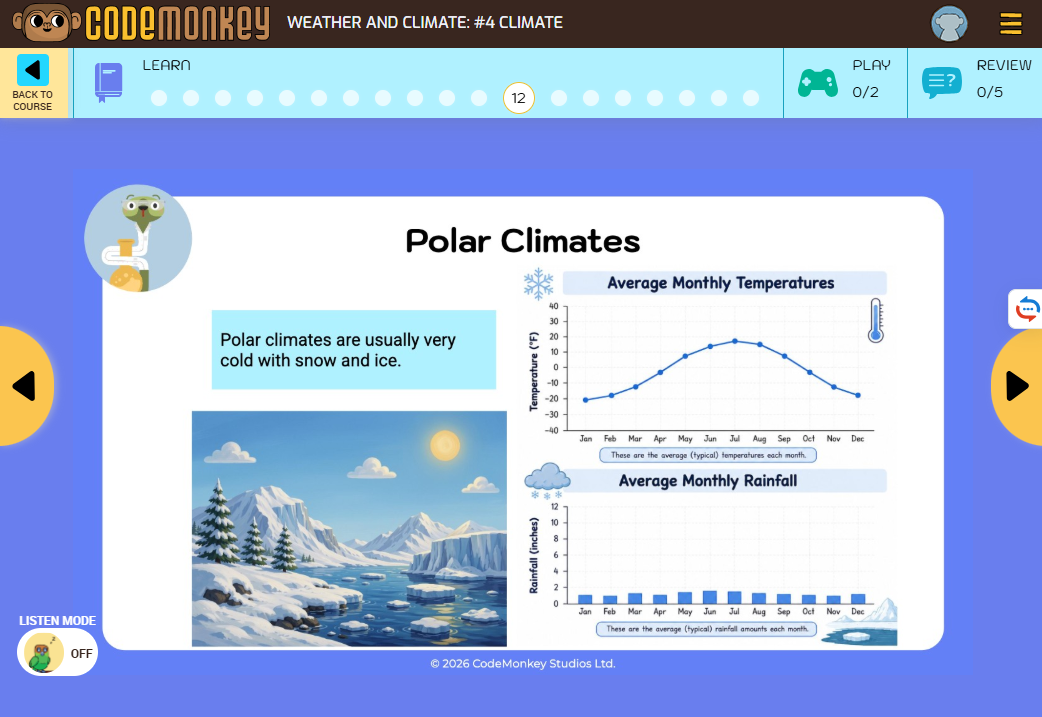
Every course blends instructional slides, virtual labs, and games so kids don't just learn science — they do science.
Aligned to the Next Generation Science Standards (NGSS)
Next Generation Science Standards

What's Inside Every Lesson

Instructional Slides

Introduce key concepts and vocabulary through engaging, interactive slides.

Virtual Labs

Simulated experiments where students predict, observe, and investigate (most courses).

Games

Fun mini-games that reinforce and apply what was just learned.

Review Questions

Five questions per lesson to check understanding — scored as the lesson grade.

Each course also ends with a printable 15-question assessment teachers can use to evaluate mastery of the course’s key concepts.

Explore the Courses

Force and Interactions

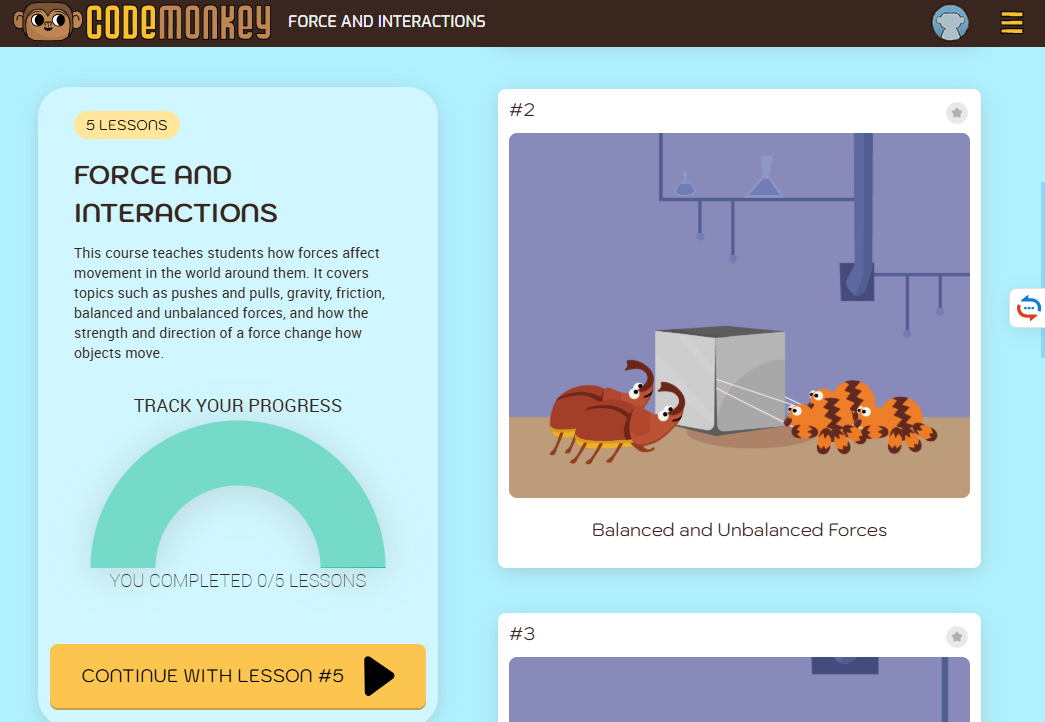
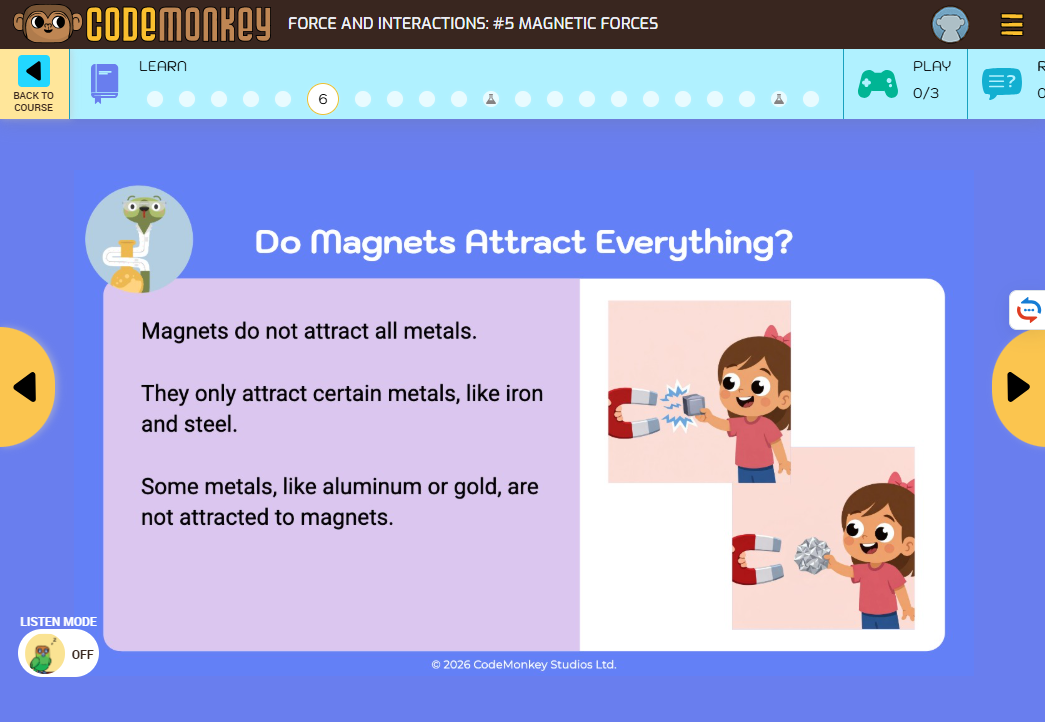
What makes things move? Students explore pushes and pulls, balanced and unbalanced forces, friction, and magnetism — testing their ideas through two virtual labs in every lesson. They’ll predict how objects move, compare forces, and discover how magnets attract and repel.

Topics: Pushes and Pulls · Balanced and Unbalanced Forces · Friction · Force Strength and Direction · Magnetism

Relationships in Ecosystems

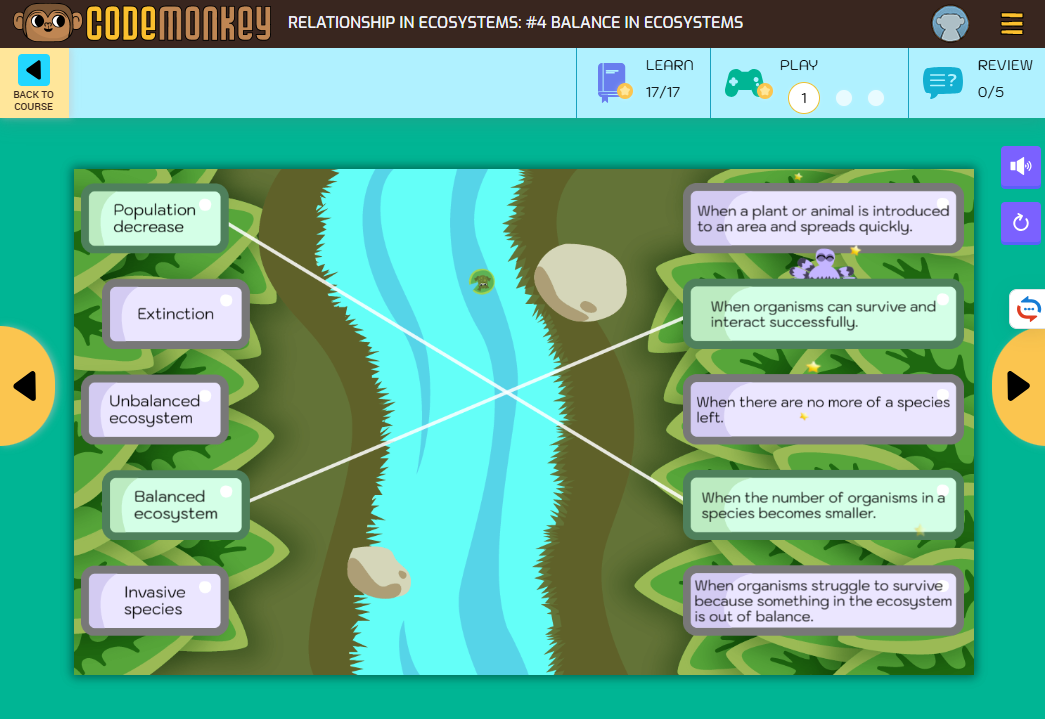
How are living things connected to each other and their environment? Students dig into food chains, food webs, adaptations, and the ripple effects of environmental change — including how humans impact the ecosystems around them.

Topics: Ecosystems · Interdependence · Food Chains & Food Webs · Ecosystem Balance · Adaptations · Environmental Changes · Human Impacts

Life Cycles and Traits

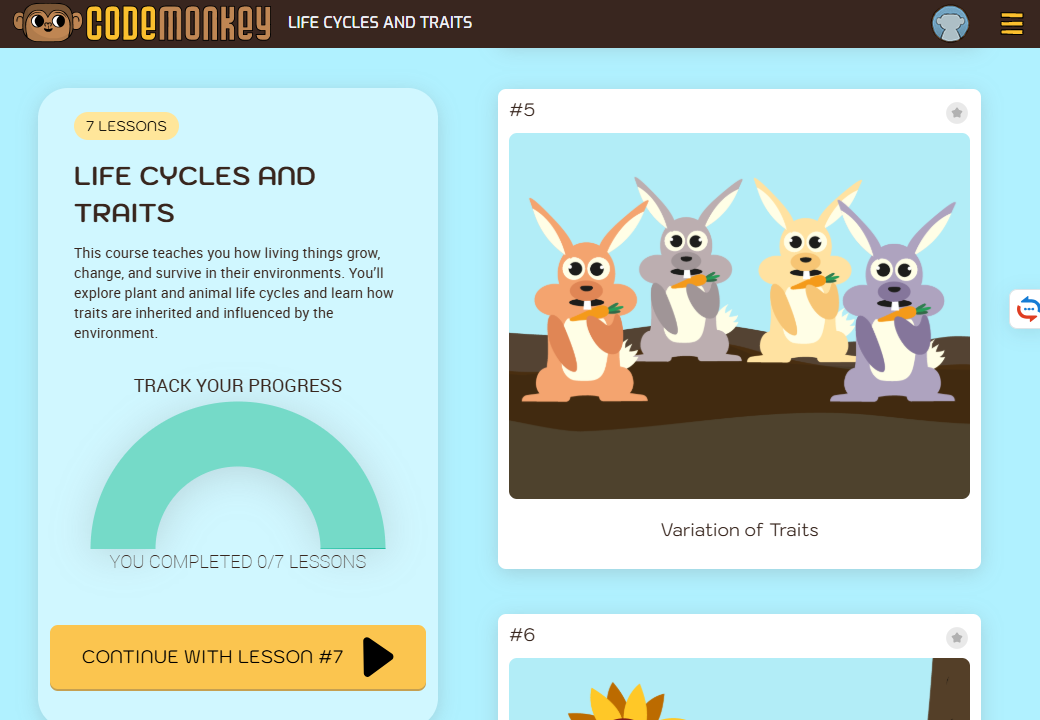
Why do offspring look like their parents — but not exactly? Students trace the life cycles of plants and animals and uncover how inherited traits, variation, and environment shape every living thing’s chances of survival.

Topics: Living Things · Plant & Animal Life Cycles · Inherited Traits · Trait Variation · Environmental Influences · Adaptations

Weather and Climate

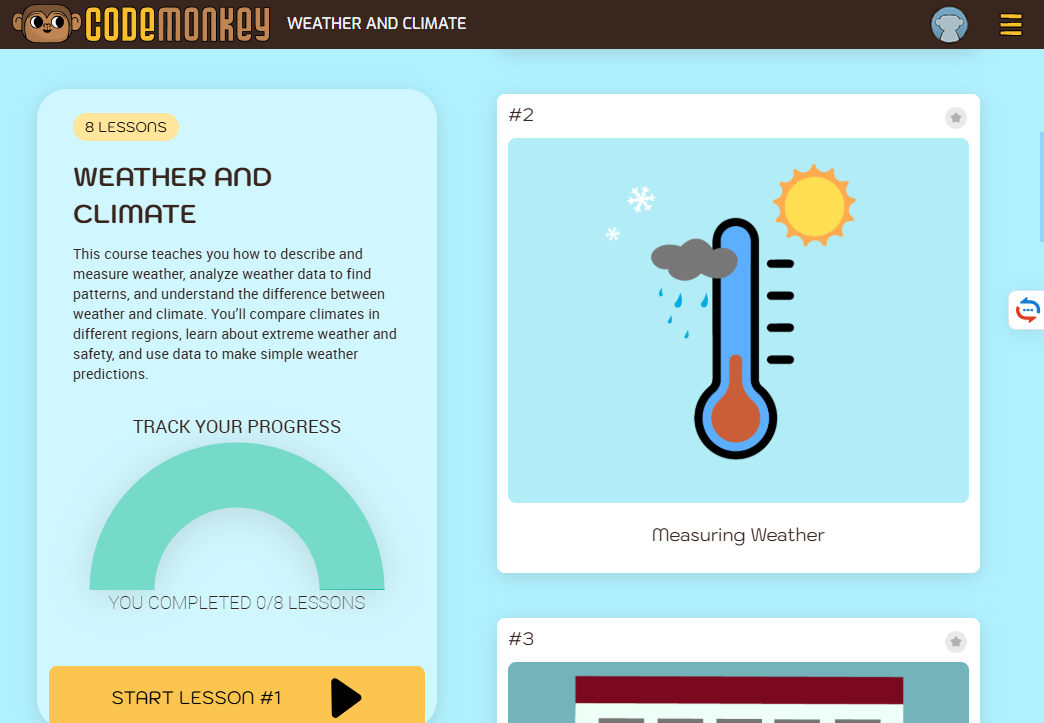
What’s the difference between weather and climate — and can you predict tomorrow’s forecast? Through virtual labs simulating real-world conditions, students explore temperature, humidity, and air pressure, and see how these combine to create rain, snow, and storms.

Topics: Weather & Climate · Weather Measurement · Weather Patterns · Clouds & Precipitation · Extreme Weather · Climate Zones · Weather Forecasting

The CodeMonkey experience sets itself apart from other providers by offering an engaging, hands-on approach that not only teaches coding concepts but also empowers students to build real-world, graphics-based GUI programs in Python. With a robust programming environment (IDE), self-paced lessons, and a comprehensive library of activities, this curriculum ensures that both new and experienced computer science educators have everything they need to drive student learning.

Simple to Start

All your classroom needs is an internet-enabled device — no extra supplies, no setup headaches. Just fill out the form and start exploring.

Award-winning Education Platform

2024
Edtech Breakthrough

Provider of the Year

2024
Best of STEM

Educator's Pick-AI Curriculum
for Teaching and Learning

2025
Edtech Impact

Top Teaching
Efficiency Tool

2025
Education Technology Insights

Best Game-Based Platform

FAQ

Just an internet-enabled device: desktop, laptop or Chromebook. No textbooks or extra supplies required.

Yes. All Grade 3 science courses are aligned with the Next Generation Science Standards (NGSS).

It varies by course: Force and Interactions (5 lessons), Relationships in Ecosystems (7 lessons), Life Cycles and Traits (7 lessons), and Weather and Climate (8 lessons).

CodeMonkey, a leading game-based learning platform, teaches students five years and older the fundamental principles of computer programming and STEM. Founded in 2014, CodeMonkey products are designed to maximize engagement and user experience to introduce students to foundational STEM skills. 

Yes! schools get full access to the entire Grade 3 science curriculum at no cost for the whole 2026-2027 school year.