Digital technology plays a crucial role in teaching, which is why tecnologia Educacional continues to grow as a career field. But what exactly is educational technology?
For most people, it’s the computers, tablets, and smartphones that students use to learn new information in the classroom — but that definition doesn’t go far enough.
From traditional classroom applications like whiteboards and projectors to modern mobile apps and virtual reality devices, Edtech has rapidly become an indispensable part of our education system over the past few years.
In this article, we will explore the true meaning of EdTech and how teachers and students are using this growing field of study in their classrooms today.
Alright, let’s dive into it!
What Exactly is Educational Technology?
EdTech is short for educational technology. It’s the use of digital technologies to improve teaching, learning, and administration in education.
Education has always been an evolving process, but with the advent of smartphones, robots, virtual reality, and the like, it’s now possible to access information anywhere in the world at any time.
The proliferation of EdTech tools is transforming classrooms in a variety of ways. EdTech robots, virtual reality, and game-based classroom activities, for example, help students stay involved through fun-based learning methodology.
Edtech devices are being lauded for their capacity to build digital classrooms for students. Yes, whether in school or the comfort of their home. Machine learning tools help teachers grade tests and hold students accountable for assignments.
The possibility for scalable, tailored learning has been critical to the EdTech industry’s emergence. However, the way we study and interact with others and our enthusiasm for different subjects are not contextual.
Everyone learns differently and at their speed. Edtech technologies allow teachers to design tailored lessons and learning experiences that encourage inclusion and improve students’ learning potential, regardless of age or ability.
According to research carried out in 2018, 86% of eighth-grade teachers pointed out that technology is crucial in educating students. Furthermore, about 75% of those teachers agreed that technology could improve some students’ academic performance.
As a result, many would argue that it’s of great importance to understand the benefits of EdTech in regard to better communication, teamwork, and overall educational quality.
The Benefits of Educational technology for Students
Edtech improves students’ education quality by making it more interactive, engaging, and personalized. This education is also beneficial because it can help students develop a strong work ethic.
Technology-based learning also helps to reduce bullying in schools because the classroom becomes a safer environment where everyone has an equal opportunity to learn.
Well, those are just the tip of the iceberg on the benefits. So let’s take a look at the benefits educational technology offers students.
- 24/7 Access to Learning
One of the benefits that students enjoy from educational technology is round-the-clock access to learning. This means that students can study whenever they want. In addition, it makes education more convenient for both schools and students.
Schools don’t have to be open so that teachers can teach during specific hours, but students still have access to lectures or materials when needed. Students who have trouble with traditional learning methods benefit most from this aspect of tech.
- Increased Collaboration
Another great thing about edtech is how much collaboration it encourages. For example, teachers can share assignments with all their students through digital platforms like Google Classroom.
This saves paper and allows for a richer discussion among peers, leading to higher-quality ideas and solutions. Edtech also allows for one-on-one communication between students and teachers if any issue or concern needs addressing immediately.
- Hands-On Learning
Rather than just having students read through an essay or watch a video, many teachers make their lessons more interactive by incorporating tools like Google Slides or Google Docs into their teaching.
This lets students go at their own pace rather than waiting for everyone else in class to finish first, which is also beneficial for kids with special needs. With these learning tools, it doesn’t matter if you learn slowly–everyone gets an even playing field!
Benefits of Edtech for Teachers
EdTech has transformed the way teachers teach, the way students learn, and the way content is delivered. Students aren’t the only ones who gain from edtech. Teachers perceive educational technology as a tool for developing effective learning methods and saving time in the classroom.
Highlighted are four ways that edtech assists instructors in getting back to doing what they do best.
- Automated Grading
One core advantage of using edtech in education is automated grading. Using programs like Turnitin or Copyscape makes it easier to identify plagiarism or if students have reused parts of their work without citing sources or not adhering to academic integrity standards.
They also make it easier for professors to see which parts of their lectures were understood by their classes and which were not. Using these tools, particularly for objective tests such as true/false, frees up hours instructors would otherwise spend grading assignments.
- Classroom Management
Instead of constantly interrupting lectures to remind students about rules and procedures, many schools now use digital screens to display announcements.
In addition, many classrooms now feature interactive whiteboards that allow teachers to display instructions digitally. These new technologies cut down on disruptions, allowing the teacher to focus on teaching instead of disciplining disruptive students.
- Paperless Classrooms
Budget printing, paper waste, and numerous hours spent at the copy machine are no longer the case with the help of edtech. Some classrooms have gone digital, making it easier to assess assignments, reducing the strain of wanting to preserve hundreds of homework files, and encouraging greener practices.
- Self-Paced Learning
It can be difficult to determine when students are ready to progress through material, especially math or science. Using edtech helps teachers know when students are ready for new material by assessing their learning after each lesson.
Examples of Educational Technology
1. Turnitin
Teachers can often detect plagiarism, but TurnItIn backs up their suspicions with real evidence. Teachers may use the company’s popular AI plagiarism checker to compare student work to earlier works in a huge multi-lingual database of papers, published academic work, and other online resources.
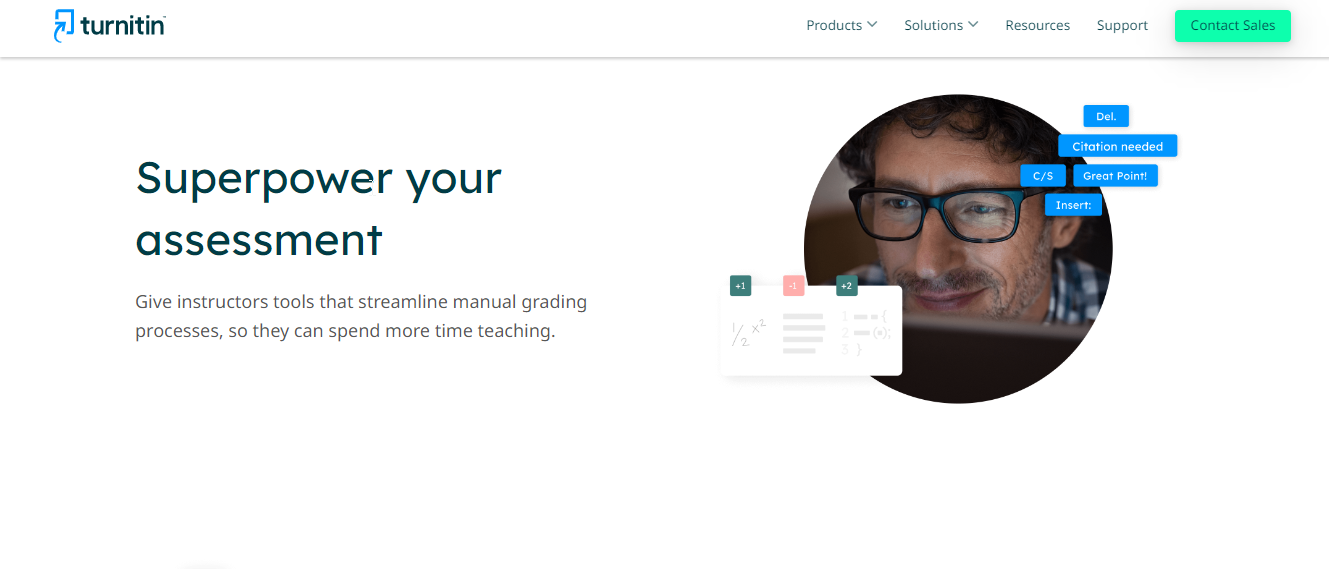
Turnitin’s search algorithm has reviewed more than 70 billion online pages since its inception in 1998.
2. Edmodo
Edmodo is a multifunctional digital gateway that allows teachers to handle everything from recording attendance to reading written assignments and auto-grading exams. In addition, Edmodo’s platform is a “learning model” designed to replace physical file cabinets loaded with classroom papers.
Furthermore, it is fully customizable, with a teaching assistant interface that includes a networking component that allows students, parents, and teachers to connect seamlessly.
3. Labster
Labster is a free online environment where students learn by simulating real life. With Labster, you can create virtual environments replicating physical or digital systems or build interactive worlds.
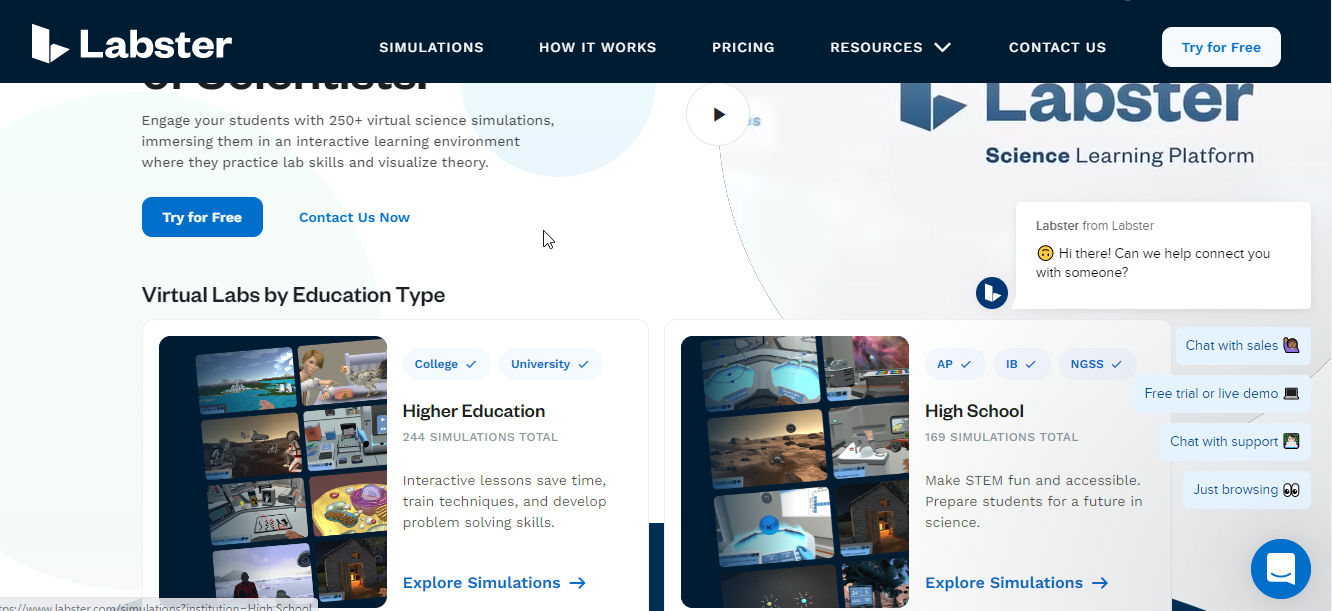
It uses computer science and engineering principles to teach topics like physics, chemistry, biology, earth science, space science, engineering design, and programming languages like C++. The courses are free as long as they’re not used for profit or commercial purposes.
4. Remind
This simple messaging app lets you stay connected to your teacher or coursemates. In addition, you’ll get text alerts when something happens at school.
Best of all, it’s easy to keep in touch with everyone with just a few taps. Plus, if your child needs to be picked up early, you can receive an alert. Notifications come directly to your phone!
5. Examity
Examity’s online testing services ensure that students who take examinations from home do so genuinely. In order to ensure online exam or test integrity, the business provides three tools: auto-proctoring, digital identification, and live proctoring.

The digital identification procedure, among other things, uses fingerprints and voice biometrics to validate identities. During auto-proctored tests or exams, machine-learning algorithms examine students’ conduct using cameras and microphones on their laptops and flag questionable activity.
Live-proctored examinations have even greater security since students are overseen by college-educated proctors who understand the software interface.
Tests, college finals, and certification examinations are examples of tests that may be conducted using the company’s platform. There is also 24-hour technical support through phone or online chat.
6. Thinkful
Edtech isn’t only for teenagers. Adults are trained in data analytics and full-stack programming in Thinkful’s virtual classrooms by teachers.
Thinkful graduates have gotten positions at digital behemoths like Google and Amazon. In addition, the company is so confident in its curriculum that students are guaranteed a tuition refund if they don’t find work within six months of graduation.
One-on-one mentoring is key to Thinkful’s strategy. Each student receives targeted, face-to-face attention from a specialist in the field they are learning through video chat.
Closing Thoughts
Technology has revolutionized the world in so many ways it’s impossible to deny. And when it comes to education, educational technology is changing how we learn and interact with teachers and classmates.
It’s opening doors that were once closed to students from all walks of life, giving them more opportunities than they would otherwise have had. In addition, edtech tools help educators by making their jobs easier, as well as helping to increase student engagement.
From virtual reality and desarrollo de juegos projects to personalized coursework for each student, it seems like there isn’t anything that can’t be accomplished with the right tech at your fingertips. It’s time for educators to embrace this revolution to educate their students who need it most!