Coding is our future – so you better start early
Technology evolves faster than education systems adapt. Those are the times we live in. Innovation is happening at an unimaginable pace; artificial intelligence is transforming industries and robotics is reshaping industries such as healthcare and manufacturing.
Those changes are creating a clear challenge for educators, school leaders and parents: what is the best way to prepare our children for a constantly changing future?
There are a lot of answers to this question, but one answer stands out: early coding education.
Learning to code is no longer an optional skill, reserved for future developers – it’s mandatory for every child. Coding became a foundational literacy, that connects in direct line to AI, tech innovation and robotics. Children who are introduced to code from an early age are developing a mindset to shape the world around them and not just building software.
Coding as the Language Behind AI and Robotics
Every major technology today shares one common foundation: code. Robots operate through programmed instructions, artificial intelligence relies on complex algorithms, and even simple applications are built on logic and structured commands.
When kids begin learning to code at an early age, they start to understand how the systems function. Quickly they learn that technology is not some kind of magic – but a built, tested and improved process. That realization is what causes the shift in their perspective from passive consumption to active understanding. Now, instead of just using the technology, they are asking questions:
- – How does this work?
- – Why does it behave this way?
- – Can I build something similar – or better?
These questions are what driving innovation in AI and robotics.
Early Coding Education and Artificial Intelligence
When you first look at it, artificial intelligence seems very far from beginner coding lessons. But this is a common mistake – the connection is much closer than it appears.
Artificial intelligence is built on the same concepts, that children explore when they begin writing code – patterns, logic and data-driven decisions. Coding teaches algorithmic thinking – when children learn to break down tasks into small and clear logical steps, this is the core of almost all AI systems.
When a child creates a sequence of instructions in a program, they are practicing the same processes used to design machine learning. In simple words, they begin to understand that the outcome of their code is not random, but a result of structured logic.

Understanding Patterns and Data
Artificial intelligence is very dependent on recognizing patterns in data. Coding develops this ability further.
When kids begin to learn coding, they start working with conditions, loops and variables. They understand quickly that even the smallest change in input can affect the output. With time that knowledge becomes intuitive – children understand how systems respond to data. This is an essential concept in AI.
From Simple Logic to Complex Systems
When you begin learning to code from an early age, you can progress quickly. Children can start from basic “if/then” statements and evolve into more advanced thinking. As their confidence advances, they can explore more sophisticated topics, such as:
- – Machine Learning
- – Data analysis
- – AI-driven applications
If you expose your children to coding at an early age, they won’t be intimidated by complex topics when they are older. AI becomes much more approachable and not abstract, if you know the basics already.
Coding as the Gateway to Robotics
There is a saying: while Artificial Intelligence is the “thinking” side of technology, robotics is the “doing” side. Robotics is what brings the code into the physical world and allows children to observe, how digital commands turn into real-world actions. This connection, that is being done by robotics, makes coding more exciting.
A robot always follows instructions – it does not act on its own. Coding is telling it what to do – when to move and when to stop, when to turn, and to respond to what’s happening around him. When kids write code for a robot, they immediately see results, because the robot takes an action. If something doesn’t work, they adjust the logic and try again. That’s how a feedback loop between thinking and doing is created.
Learning Through Experimentation
Experimentation in robotics is on a much bigger scale that other subjects. Children can always test their ideas, play with the outcomes and take a different approach in case something goes wrong. That’s the best way to learn that failure doesn’t have to be a setback but can be a part of the process. This mindset is critical not only in the field of robotics, but in all areas of innovation and technology.
Coding and Robotics Bridging Digital and Physical Skills
One of the most valuable outcomes of combining coding and robotics is that it bridges two worlds. Children develop:
- – Technical understanding
- – Creative thinking
- – Practical problem-solving skills
The bridging of coding and robotics prepares them for future fields, where software and hardware are increasingly overlapping.

Technology Innovation Starts with a Mindset
When we think about tech innovation, we often make a mistake of thinking first about revolutionary ideas or groundbreaking products. But innovation begins with people, and not with technology. Even more important – it starts with how people think.
Learning to code helps with developing a mindset that always thinks innovation. Kids are constantly learning to think creatively, approach problems in a certain, systematic way, and to push through challenges.
The Shift of the Paradigm – from Passive User to Active Creator
Most children today (at least in the western world) grow up surrounded by technology. From a very early age they are exposed to devices, use apps, play games and interact with digital platform on a daily basis. Still, without knowing how to code, they remain consumers. It’s the coding knowledge that changes that dynamic.
Knowing how to code gives the children tools to create instead of consuming. Now, when they have the knowledge, they can experiment with different ideas, create games and build applications. This shift is a critical turning point for fostering innovation.
Coding does not only teach a specific skill, but it also teaches how to learn. Children who know how to code, know better how to adapt, evolve, and stay relevant in a constantly changing environment.
Coding Encourages Curiosity and Exploration
Innovation flourishes with curiosity. While learning to code, children are encouraged to explore different “what if” scenarios. For example – what if I change this variable? What if I’ll use a different approach to this problem?
This kind of exploration is needed to build a kid’s confidence and independence. Children learn that they can figure things out on their own, which is a very important tool in their skills-building set.
Cognitive Benefits of Coding Education That Extend Beyond Technology
Perhaps the strongest argument for early coding education is that its benefits go far beyond the technology itself. Coding is not only teaching a specific skill – it teaches how to learn. Children who know how to code, know better how to adapt, evolve, and stay relevant in a constantly changing environment.
Coding also supports and strengthens cognitive abilities that are useful in virtually every field. Children who begin their coding education early often have stronger logical reasoning. They are better at using a “step-by-step” approach when facing complex problems – a skill, that is very valuable not only in coding or computer science, but also in mathematics, science and everyday decision-making.
Persistence is another benefit of coding education. Programs usually don’t work on the first attempt. Children learn to revise, debug, and try again. With time, they become more resilient and less afraid of making mistakes.
And last but not least – attention to details. The smallest error in code, like a misplaced semicolon, can lead to unexpected results. This teaches children to be very precise, always pay attention and be thoughtful in their work.
All those cognitive skills give children an edge and form the foundation for success in both academic and real-world environments.
Why Starting Early Makes a Difference
When introducing coding at an early age, there is a significant advantage for kids. Young children are naturally curious, more open to new ways of thinking and much less intimidated by technology than adults.
They are more willing to experiment with new concepts and ideas – for them coding is just another way of thinking, like reading or basic math. That’s why it is very important to begin as early as possible.
We should also understand that coding can be overwhelming in a late encounter in life. That’s why early exposure is important – because children grow up with a better approach to technology. They view it as a tool that they can understand and control, and not something that intimidates and controls them.
In addition, early coding education builds confidence gradually, because it allows children to progress at their own pace – beginning with very simple concepts and slowly move toward more complex ideas and tasks. As a result, when kids finally encounter advanced topics like artificial intelligence or robotics, they already have a very strong foundation.
The importance of making learning engaging
In our fast-paced world, it’s hard to keep children engaged – that’s why contemporary coding platforms use interactive, game-based approach. This is where solutions like CodeMonkey quietly play an important role.
By combining storytelling, challenges, and real coding languages, platforms like CodeMonkey make it easier for students to stay motivated while developing meaningful skills. The learning experience feels less like a traditional lesson and more like exploration.
The Role of Schools in Coding Education
While parents play an important role in a child’s guidance, schools are really the key to scaling the coding education effectively. Integrating programming into the school curriculum ensures that all students can master the skills and use them when necessary.
Coding should be a part of core learning, and it does not need to be a standalone subject. It can be easily integrated into other existing disciplines through project-based learning and problem-solving activities. This approach can really help students see coding as an everyday tool and not as an isolated skill.
Supporting Teachers with the Right Tools
Teachers need support for the coding education to succeed. They need easy platforms, structured lesson plans, dashboards and other intuitive tools that simplify the teaching process.
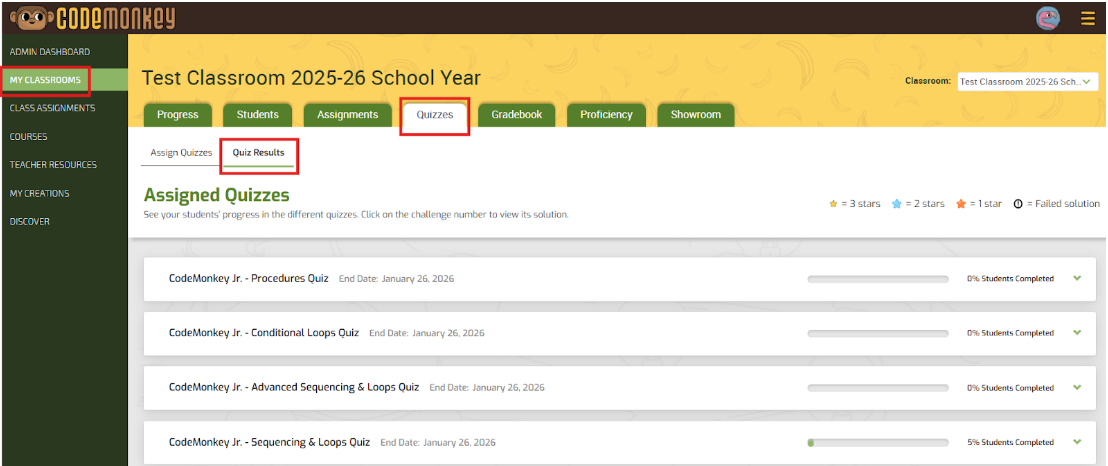
This is another area where CodeMonkey shines. Platforms like CodeMonkey provide all the necessary tools – ready-to-use curricula, progress tracking, all-in-one dashboard and a framework that reduces complexity for educators.
Preparing Students for Real-World Challenges and AI-Driven World
Artificial intelligence, robotics, and automation are no longer future concepts – they are shaping the present as we speak. Children entering the workforce in the years to come will deal with technologies we are only beginning to understand today. That’s why early coding education will give them a critical advantage.
They will see logic behind an automation, understand how AI systems make decisions and eventually get the confidence to interact with technology on a deeper level. Early coding education will put them at a place where they are not only users of technology, but contributors to its development.
Conclusion: Coding as a Foundation for the Future
Early coding education is one of the most powerful ways to prepare children for a world driven by AI, robotics, and continuous technological innovation.
It builds more than technical knowledge. It develops problem-solving skills, logical thinking, creativity, and resilience.
It connects directly to the technologies shaping our future while also strengthening the cognitive abilities needed to navigate that future.
And perhaps most importantly, it empowers children to see themselves as creators.
Because the future will not be defined only by those who understand technology – but by those who can build it.