Technology is becoming increasingly important in people’s everyday life. That’s a fact. It influences how people communicate, work, solve problems, it also affects how students learn. That’s why computer science education plays an important part in elementary school experience – introducing this field at an early age can help children develop skills far beyond coding.
Still, for schools, implementing an elementary computer science program is never easy and raises many questions.
Let’s take a few for example – what exactly should elementary students learn? How much instructional time is necessary? At what age a student should begin to learn coding? How to keep the students engaged? Do teachers need a computer science background? How can computer science education prepare students for emerging technologies such as artificial intelligence? And of, course, there is many more.
Well, there is good news – school don’t need to begin with a complicated technology program or an advanced programming course. A successful elementary computer science program can start with simple concepts and step-by-step build the students’ skills with hands-on, age-appropriate activities.
This guide will explain thoroughly how any school can implement computer science education in elementary classes and how CodeMonkey can help teachers to provide engaging and structured learning experiences.
Why Teach Computer Science in Elementary School?
It’s important to understand that there’s much more to computer science than just learning how to code. Elementary computer science education helps students develop pensamiento computacional – the ability to break problems into smaller parts, create step-by-step solutions, recognize patterns and understand the concept of algorithms. All these skills can support students across many areas of learning.
For example, when students debug a problem, they are learning problem-solving and persistence. When they learn how to create an algorithm, they are practicing logical thinking. When they build a game, they are combining structured thinking with creativity.
The sooner you start – the more time students will have to develop these skills. There is no reason to wait until middle school or high school, to introduce them to programming – school can create a gradual K-12 computer science pathway in which students will learn, progress and build on what they learned year by year.
Starting computer science education early is even more important now with the “rise” of artificial intelligence. Students don’t need advanced AI or machine learning courses in elementary school, but they do need to develop a strong foundation in computer science, algorithms, data and logical thinking as soon as possible, so they can be prepared for AI education later.
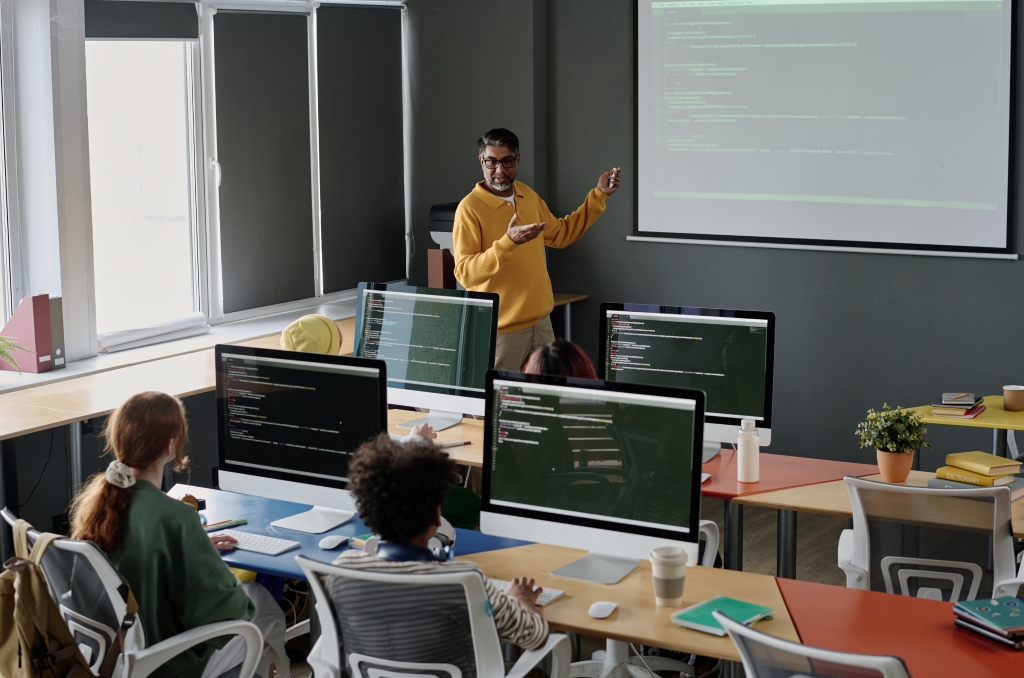
What Should Elementary Students Learn in Computer Science?
Elementary computer science should first and foremost be age-appropriate, meaning that it should focus on concepts young students can understand and apply.
A strong elementary computer science curriculum should include:
- Pensamiento computacional
- Resolución de problemas
- Algorithms and sequencing
- Patterns and logic
- Basic programming concepts
- Loops and repetition
- Condicionales
- Depuración
- Creativity and project-based learning
- Alfabetización digital
- Responsible technology use
- Introduction to artificial intelligence concepts
Of course, the main goal should not be to cover everything at once. Schools should build a progression, that bit by bit introduces new concepts, and gives students an opportunity to practice what they already learned. For younger students in the beginning, it can be simple algorithms and sequencing. And, as they progress, they can start using conditions, loops, variables and other programming concepts.
Step 1: Start With Clear Learning Goals
The first step, even before selecting a curriculum or a platform – schools should figure out, what they want students to accomplish. A practical elementary computer science program should have clear learning objective for each grade level.
For example, younger elementary students should focus on:
- Understanding sequences
- Recognizing patterns
- Following and creating algorithms
- Solving simple logical problems
While older elementary students can begin learning:
- Bucles
- Condicionales
- Variables
- Funciones
- Depuración
- More complex algorithms
- Programming projects
This will provide a solid foundation for a longer K-12 computer science pathway. The question is not “What coding activities should our students do?”. The question that schools should be asking first is “What should our students know and be able to do by the end of each grade level?”. This approach will make it much easier to select the right curriculum and measure students’ progress.
It’s important to keep in mind the student’s progress and what they will be able to do in the end of the year. CSTA’s PK-12 CS standards are worth a look here – they break down realistic expectations by grade band, from kindergarten through 5th grade, so you’re working from something more solid than a guess at what’s age-appropriate. They are a useful tool to check for whether your goals actually fit the age group in front of you.
Step 2: Introduce Computational Thinking Before Complex Coding
Students don’t need to learn programming syntax at the beginning – their starting point can be the concepts of computational thinking.
They learn to:
- Break a problem into smaller pieces.
- Identify patterns.
- Create a sequence of steps.
- Test a solution.
- Find and fix mistakes.
These fundamental skills are useful not only in programming, but also in everyday problem-solving.
Let’s take an example – a teacher asks students to make a sandwich. Even in such a simple task students discover that order of the instructions matter, and they are introduced to the concept of an algorithm. From there the teacher can connect the dots to coding. Later, when students will be required to write programs, they already understand that computer need precise instructions, and that problems are solved through logical steps.
Step 3: Make Coding Hands-On
Computer science education should give students opportunities to actively create rather than passively watch demonstrations, because elementary students learn much better when they can experiment by themselves and see the results of their actions.
That’s why it’s much better for them to use a loop when solving a challenge then to watch a teacher writes a loop. Instead of reading about debugging, student can debug a problem in their own program and figure out how to fix it. Instead of learning a definition of an algorithm, they can create one that controls a character in a game.
Hands-on learning makes abstract concepts real. It also gives a student immediate feedback. If the program works, they see the result. If it’s not, they have an opportunity to explore and investigate why. This process helps them to turn mistakes into a part of the learning experience.
Step 4: Use Age-Appropriate Coding Tools
Right technology is very important and can make a significant difference in elementary computer science education. Younger student will benefit more from visual programming environments that can help them learn different concepts without being overwhelmed by complicated programming syntax. They can move towards text-based coding later, as they develop their skill.
This progression is important. Block-based coding provides an excellent introduction to different concepts such as loops, conditions, sequencing and events. Later, students can apply the same concepts when using real programming languages such as Python and JavaScript.
Therefore, schools should look for a curriculum that can expand and grow with students, rather than requiring them to use a completely different platform each year.
Step 5: Make Computer Science Engaging
Keeping students interested is one of the biggest challenges in elementary education. Computer science offers an advantage: students can create things. From games to puzzles, animations and interactive projects – they give students a reason to apply what they are learning.
That’s why game-based learning is especially effective. When a student is trying to solve a coding puzzle, they are not thinking of themselves as completing an academic task. They just trying to solve a problem and move forward. But along the way, they are practicing logical thinking, persistence, programming and debugging. The most important challenge is not to remove rigor from computer science – but to present that rigor in an encouraging way for the students, for them to keep practicing and experimenting.
Step 6: Give Students Opportunities to Debug
Elementary computer science curriculum should have a special attention for debugging. Students must learn from an early age that programs don’t always work from the beginning – and this is ok.
When something goes wrong, students can learn to:
- Identify the problem
- Examine their instructions
- Test possible solutions
- Change their code
- Try again
- Evaluate the result
This process builds an important mindset regarding problem-solving. Students start to see mistakes as an information, and not as a failure. That mindset is one the most valuable outcomes of elementary coding education.
Step 7: Plan for Different Student Skill Levels
The technology experience of students in elementary classroom is very different. Some of them never wrote a line of code, while others may already try to build games or used programming platforms. That’s why a successful computer science program needs to acknowledge those differences and accommodate them.
Self-paced learning can be applied in this situation. Students need to work through challenges at the speed appropriate for them, while teachers can provide additional support to those who need it.
Advanced students can continue to other, more challenging activities, rather than wait for the entire class to finish and catch up.
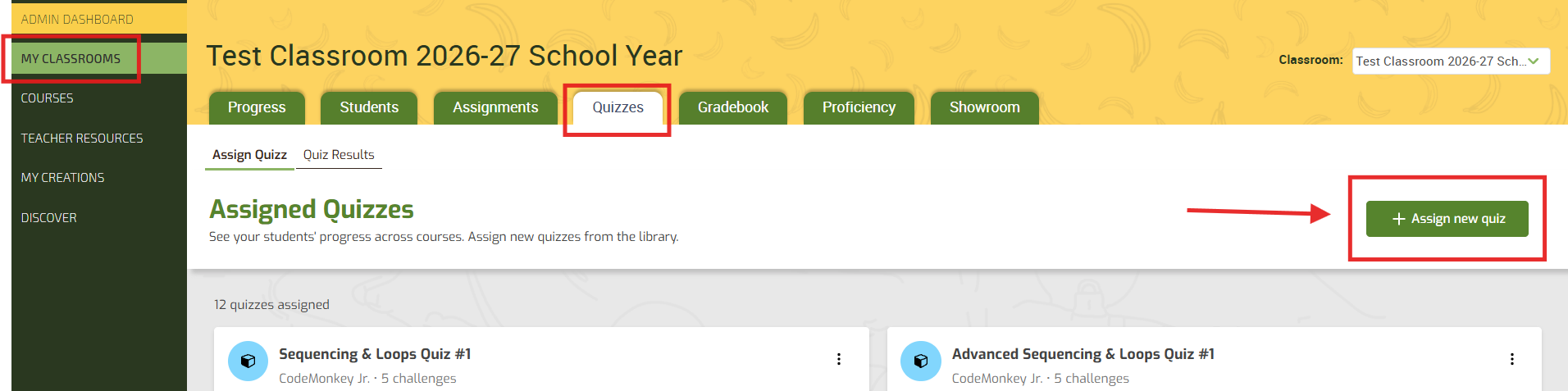
A good teacher dashboard helps educators identify which students are progressing rapidly and which ones need additional instruction and help. This is one of the biggest advantages of using a structured “all-in-one” computer science platform instead of relying on individual worksheets or not related activities.
Step 8: Make Computer Science Accessible to Teachers
Teacher confidence is one of the biggest barriers to overcome when it comes to implementing elementary computer science education.
A lot of elementary teachers were not trained as computer science educators, but that doesn’t mean they cannot successfully teach computer science. All they need is the right curriculum, that will provide them the structure and resources they need.
When evaluating an elementary computer science program, schools should look for:
- Ready-to-use lessons
- Guías para profesores
- Planes de lecciones
- Student activities
- Assessments
- Classroom management tools
- Student progress tracking
- Desarrollo profesional
- Technical support
The right platform can reduce the amount of preparation required and let teachers focus on facilitating student learning.
Step 9: Introduce AI Literacy Gradually
Artificial intelligence is becoming an increasingly important part of technology education. But AI education for elementary students doesn’t mean building machine learning models or studying complex algorithms – schools can start with age-appropriate AI literacy.
For example, students can think about these questions:
- What is artificial intelligence?
- Where do we encounter AI?
- How do computers recognize patterns?
- How does data influence technology?
- Can computers make mistakes?
- Why shouldn’t we automatically trust everything an AI system produces?
- How should we use technology responsibly?
When students understand data, programming, algorithms and problem-solving, they have a stronger foundation for understanding AI later in their education. That’s what computer science education provides. That’s also why schools should teach AI readiness as part of an elementary computer science curriculum. It doesn’t have to be a separate course yet.
Step 10: Track Student Progress
Implementing a good computer science program is not just about giving students access to coding activities. Schools (and teachers) should be able to understand what students are learning.
Teachers can monitor progress through:
- Completed coding challenges
- Quizzes
- Projects
- Assessments
- Programming exercises
- Teacher observations
Digital platforms can make this easier by providing all the information regarding student progress in one place. For teachers and administrators this information can also help evaluate the effectiveness of a school-wide computer science program and identify spots where students might need extra support.
Step 11: Build a K-12 Pathway
Elementary computer science is the beginning of a journey, not the end. That’s why school should evaluate how the skills students learn in elementary school will prepare them to succeed in middle school and later high school.
Por ejemplo:
Elementary School
Computational thinking → sequencing → algorithms → introductory coding → basic programming concepts
Middle School
Programming → problem-solving → algorithms → projects → text-based coding → Python
High School
Computer science → Python → web development → game design → advanced programming → AI and other technology topics
A clear progression will prevent students from learning the same introductory concepts and provide them with an opportunity to build increasingly sophisticated skills.
How CodeMonkey Helps Schools Teach Computer Science in Elementary School
CodeMonkey was designed to make computer science education engaging and easy to use – both for teachers and students. Students learn by actively solving problems and writing code, rather than passively watching instructional videos.
Through game-based coding challenges and activities, students can practice different concepts: sequencing, loops, conditionals, variables, functions, and debugging.
CodeMonkey provides elementary students with age-appropriate coding experiences and also support a gradual progression toward real programming. As students advance, they can move from block-based to text-based programming languages and develop skills that prepare them for more advanced computer science courses.
As for teachers – CodeMonkey provides ready-to-use curriculum resources and classroom tools that designed to simplify implementation. Teachers can easily manage their classrooms, monitor student progress and access all the instructional resources from the platform. They can see everything in one-in-all dashboard.
This means schools don’t have to build from scratch the entire elementary coding curriculum, but to use one CodeMonkey provides.
Why CodeMonkey Uses Game-Based Learning
CodeMonkey’s approach is based on the idea that students will learn best when they are actively involved. The coding challenges give the students a goal to work toward and an immediate reason to apply what they have learned.
Instead of simply memorizing what a loop or a sequence means, students use these concepts to solve problems. This makes programming more interactive and helps students develop skills that go beyond coding and can be applied in other situations.
Logical thinking, creativity, problem-solving and persistence – all become part of the learning experience. For elementary students, that combination of engagement and skill development is more likely to create a positive first experience with computer science.
A Simple Way to Start an Elementary Computer Science Program
Schools don’t need to implement a complete K-12 computer science program overnight. They can use a more practical approach:
1. Define your goals.
Determine what students should learn at each grade level.
2. Choose standards.
Identify the computer science standards and learning objectives your school will follow.
3. Select age-appropriate curriculum.
Choose resources that match your students’ developmental and technical levels.
4. Prepare teachers.
Provide lesson plans, training, and resources that make teachers comfortable with the curriculum.
5. Start small.
Begin with one grade level, class, or unit and use the experience to improve the program.
6. Track progress.
Use assessments and student data to understand what is working.
7. Build a progression.
Connect elementary learning to middle and high school computer science courses.
8. Expand over time.
Use feedback from teachers and students to develop the program across additional grades.
This long-term thinking approach will allow schools to build a sustainable computer science program, instead of treating it as a one-time activity.
Final thoughts: The Future of Elementary Computer Science Education
Technology will continue to change, but the fundamental skills students develop through computer science will remain valuable. Children who learn to recognize patterns, break down problems, test ideas and learn from their mistakes are developing skills that goes far beyond computer science and will help them in many other areas of their education and future careers.
The rise of artificial intelligence makes these skills even more relevant. As AI tools become more capable, students will need to understand not just how to use the technology, but the meaning behind it – how this technology works, how to analyze the outputs and to think critically about the systems around them.
Elementary school is an ideal place to begin that journey. The goal here is not to turn every child into a professional coder – it’s to give them the opportunity and the tools to become a confident problem-solver and a creative thinker.